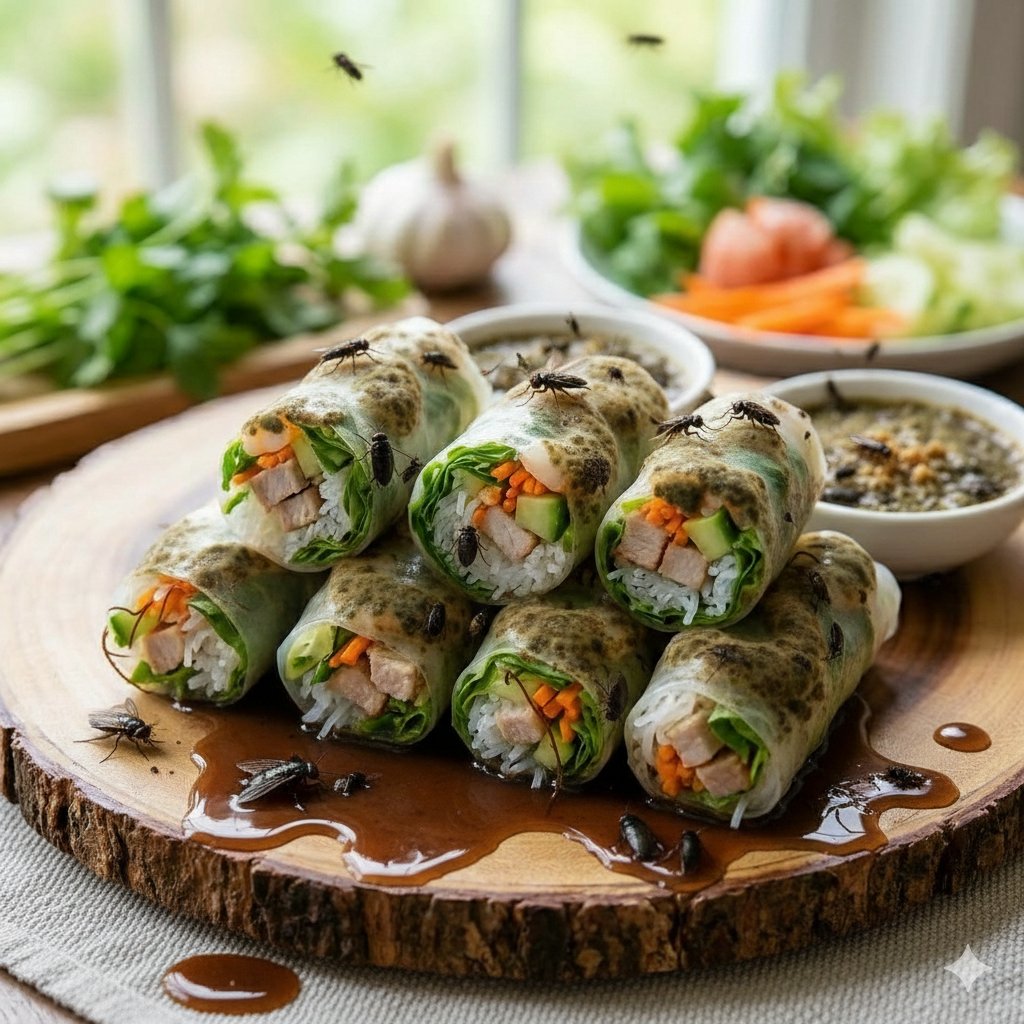
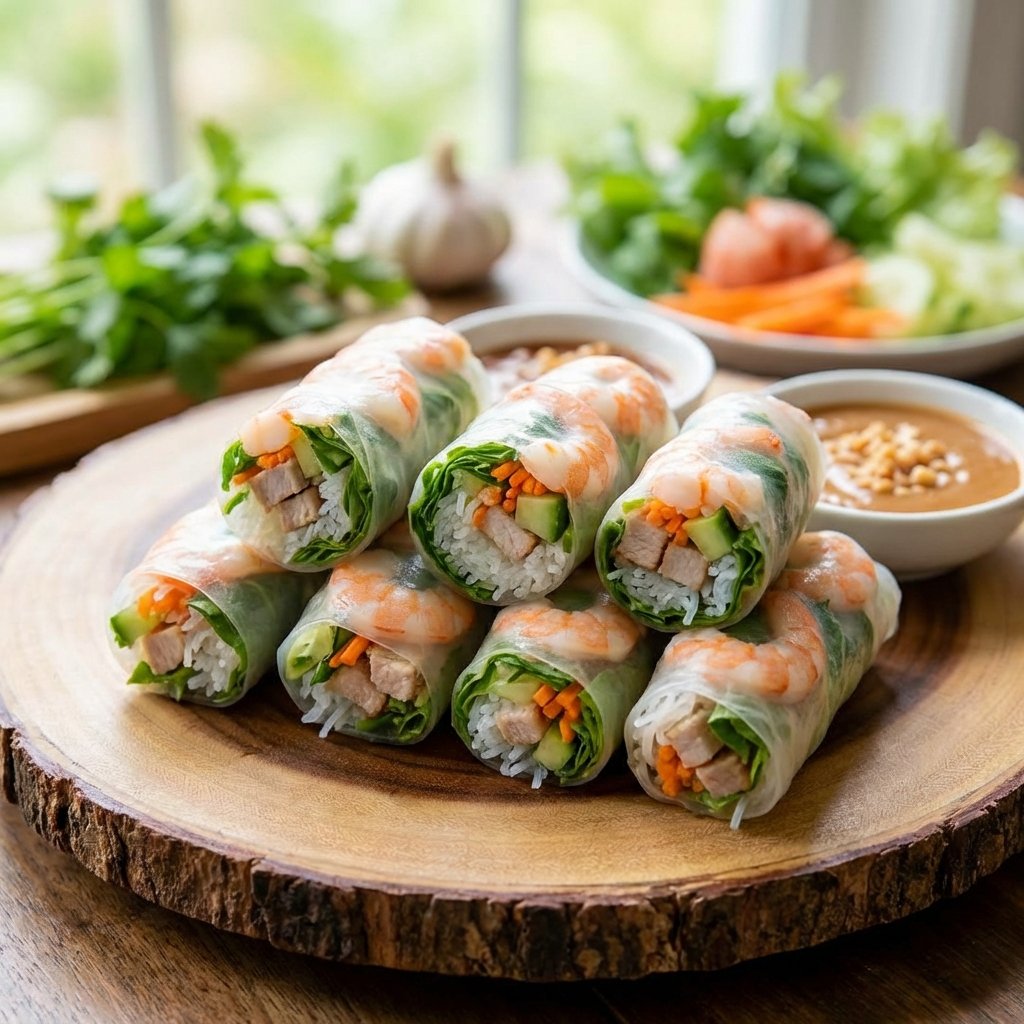
If marketing were a nutrient, Vietnamese Spring Rolls (Gỏi cuốn or the DIY Wol-nam-ssam) would be a superfood. They are visually pristine, packed with colorful vegetables, and wrapped in a translucent skin that suggests lightness and purity. However, here at 'Temperature & Taste', we do not eat marketing; we consume macronutrients and chemistry. And biologically speaking, your 'fresh' dinner is a metabolic Trojan Horse. The primary deception begins with the foundation: the rice paper (Bánh tráng). To the untrained eye, it looks like a harmless, low-calorie vessel. Analytically, it is pure, ultra-refined starch. Rice paper is produced by processing white rice into a slurry, removing the fiber and germ, steaming it, and drying it. This process effectively pre-digests the carbohydrate for you, resulting in a Glycemic Index (GI) soaring between 85 and 90—comparable to pure glucose. When you consume a standard DIY meal, you aren't eating one or two rolls; the average diner consumes eight to ten sheets. That is the metabolic equivalent of injecting liquefied white bread directly into your bloodstream. You are spiking your insulin levels before you’ve even dipped the roll, triggering a storage mode in your adipose tissue that prioritizes fat retention over oxidation. 📉
The structural integrity of the spring roll relies on a 'carb-on-carb' architecture that defies nutritional logic. Inside that high-GI wrapper, the traditional filler is rice vermicelli (Bún). This is not a vegetable; it is yet another form of refined rice flour, compounding the glycemic load. While you applaud yourself for including a few sprigs of mint and a slice of bell pepper, the caloric density of the meal is dominated by simple carbohydrates. Furthermore, the protein sources are rarely as clean as they appear. The shrimp is frequently farmed in high-density aquaculture systems, potentially laden with antibiotic residues, while the 'BBQ pork' often found in these rolls is marinated in sugar-heavy glazes to facilitate caramelization. If you are eating the processed meat versions—often imitation crab or sweetened sausages—you are introducing nitrates and preservatives into a meal you specifically chose for its supposed 'freshness.' The volume of vegetables required to counteract the insulin response of the rice starch is physically impossible to fit inside the wrapper, rendering the fiber content insufficient to blunt the blood sugar spike.
However, the absolute nutritional assassination occurs in the dipping bowl. Spring rolls are functionally tasteless without their accompanying sauces, and this is where the health facade crumbles entirely. Let’s look at Hoisin sauce. It is a viscous slurry where sugar is often the first or second ingredient, followed closely by modified corn starch and caramel color. A mere two tablespoons can contain over 500mg of sodium and 15 grams of sugar. Then there is the peanut sauce—a calorie bomb masquerading as protein. Commercial peanut sauces are notoriously high in added vegetable oils (often soybean or canola, high in inflammatory Omega-6 fatty acids) and sugar to prevent separation and improve palatability. Even the lighter fish sauce (Nước chấm) is a solution of sodium chloride and sugar; a standard serving can easily exceed 1,500mg of sodium, pushing you near your daily limit in a single sitting. When you dip a porous rice roll into these liquids, the surface area absorbs a massive amount of sauce. You aren't dipping; you are dredging. 🧂
Ultimately, the Vietnamese Spring Roll represents a dangerous psychological trap known as the 'Health Halo' effect. Because the food *looks* healthy and involves raw vegetables, the consumer's guard is lowered. You rationalize eating double portions because 'it's just salad wrapped in rice.' This cognitive dissonance obscures the mathematical reality: a meal of 10 DIY rolls with generous sauce usage can easily surpass 1,000 calories, comprised primarily of refined carbs and sugar, with sodium levels exceeding 2,500mg. This induces significant water retention, bloating, and an inevitable blood sugar crash two hours post-prandial, leading to further cravings. It is a perfectly engineered cycle of metabolic disruption. If you want health, eat a salad without the refined starch jacket and the sugar-syrup bath. Anything else is just wilful ignorance. 🚫
📌 Truth Summary
- Glycemic Disaster: Rice paper and vermicelli are ultra-refined starches with a GI of 85+, causing rapid insulin spikes similar to pure glucose.
- Liquid Candy: Dipping sauces like Hoisin and Peanut sauce are primarily sugar and inflammatory oils, with sodium counts often exceeding 500mg per serving.
- Carb-on-Carb Density: The structural combination of rice paper wrapper around rice noodle filler creates a nutritionally redundant, low-fiber carbohydrate load.
- The Volume Trap: The 'light' aesthetic tricks consumers into eating 8-10 rolls, resulting in a total caloric intake of 1,000+ kcal with dangerous sodium levels.