
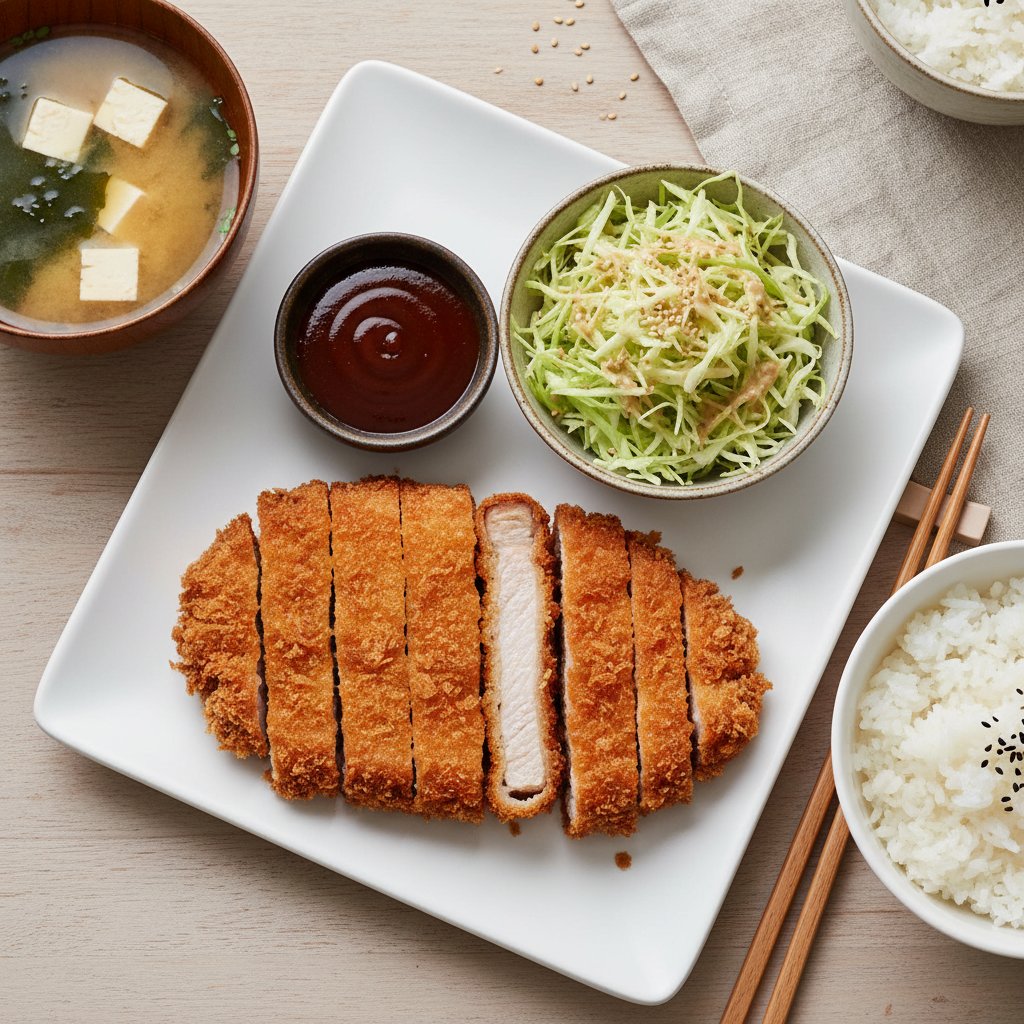
When you look at a plate of Tonkatsu, your brain is likely triggered by the engineered hyper-palatability of the dish: the symmetry of the cutlet, the golden hue of the panko, and the promise of a savory crunch. However, as an analytical observer of nutritional biochemistry, I see something entirely different: a sponge of thermal degradation. Tonkatsu is, effectively, a masterclass in how to take a relatively benign protein source—pork loin or fillet—and transmute it into a carcinogenic, caloric weapon. The primary offender here is the preparation method. Deep-frying at temperatures exceeding 170°C (338°F) does not merely 'cook' the food; it initiates a violent chemical reorganization. The 'golden' color you prize is the result of the Maillard reaction, which, while tasty, runs parallel to the formation of Advanced Glycation End-products (AGEs). These compounds are directly linked to oxidative stress and chronic inflammation in the human body, accelerating cellular aging and tissue damage. Furthermore, the panko breadcrumbs act as a hyper-absorbent matrix. Unlike a solid surface, the porous nature of panko increases the surface area available for oil uptake by a factor of ten. You are not eating pork; you are eating a solidified block of oxidized vegetable oil held together by meat fibers. 📉
Let us dissect the lipid profile with cold, hard numbers. A standard serving of Tonkatsu (approx. 150-200g of meat) can easily surpass 1,000 calories once you account for the oil absorption, which typically constitutes 15-20% of the final weight. If the restaurant uses cheap, commercially viable oils like soybean or canola, you are ingesting a massive bolus of Omega-6 fatty acids, throwing your Omega-3:6 ratio into a pro-inflammatory tailspin. Even worse is the stability of the frying medium. In commercial settings, oil is reused for days. With every heating cycle, the oil undergoes hydrolysis, oxidation, and polymerization, creating Total Polar Materials (TPMs) and toxic aldehydes like 4-hydroxy-trans-2-nonenal (HNE). These aldehydes are cytotoxic and have been linked to neurodegenerative diseases and cardiovascular dysfunction. When you consume that 'crispy' exterior, you are essentially ingesting a concentrated dose of lipid peroxides that begin attacking your endothelial lining—the inner wall of your blood vessels—within hours of consumption. The concept of 'Hire-katsu' (fillet) being a 'healthy' option is a statistically insignificant distinction; the reduction in intramuscular fat is rendered irrelevant by the sheer volume of exogenous, oxidized fat absorbed by the batter.
Beyond the macros, we must address the carcinogenicity inherent in this cooking style. When animal protein is subjected to the high temperatures of deep-frying, amino acids, sugars, and creatine react to form Heterocyclic Amines (HCAs). These are potent mutagens. Simultaneously, the starchy breading, browned to perfection, is a breeding ground for Acrylamide, a chemical compound classified as a probable human carcinogen by the IARC. You are consuming a 'double-threat' cocktail of mutagenic compounds. The 'double-fry' technique, often touted by artisanal Tonkatsu chefs to ensure the meat is cooked while the crust remains crisp, simply prolongs the exposure to these high temperatures, maximizing the synthesis of these harmful compounds. Your body's detoxification pathways—specifically the liver's cytochrome P450 enzymes—must work overtime to neutralize these toxins, diverting resources from other critical metabolic maintenance tasks. It is a physiological tax that you pay with every bite, leading to cumulative DNA damage over time. ☠️
Finally, we must evaluate the 'accessories' that complete this metabolic wreck: the sauce and the sides. Tonkatsu sauce is deceptively dangerous. It is not merely a condiment; it is a viscous solution of High Fructose Corn Syrup (HFCS) and sodium. A mere two tablespoons can contain over 600mg of sodium and 8-10g of sugar. When combined with the high-glycemic index white rice usually served alongside, you create a massive spike in blood glucose and insulin. This insulin surge, occurring in the presence of high levels of dietary fat (from the fry oil), creates the perfect storm for adipose tissue storage. This is known as the 'supra-additive' effect, where the combination of fat and sugar is more metabolically damaging than the sum of its parts. Even the shredded cabbage, often defended as the 'healthy' offset, is negligible in its protective effects against the onslaught of oxidized lipids and sugar. The cabbage is merely fiber theater—a garnish to make you feel less guilty about the arterial assault you are committing. From a temperature and taste perspective, Tonkatsu is hot and savory. From a biological perspective, it is a high-risk gamble with your metabolic longevity.
📌 Truth Summary
- Lipid Peroxidation: The porous panko batter absorbs oxidized, degraded oils containing cytotoxic aldehydes (4-HNE) that damage blood vessel linings.
- Carcinogenic Cocktail: High-heat frying generates Heterocyclic Amines (HCAs) in the pork and Acrylamide in the breading, creating a dual-mutagen threat.
- Caloric Density: A single set exceeds 1,000 calories with a pro-inflammatory Omega-6 profile, rendering the 'lean meat' argument statistically irrelevant.
- Insulin & Sodium: The accompanying sauce is a high-sodium sugar bomb that, combined with white rice and dietary fat, maximizes fat storage efficiency.