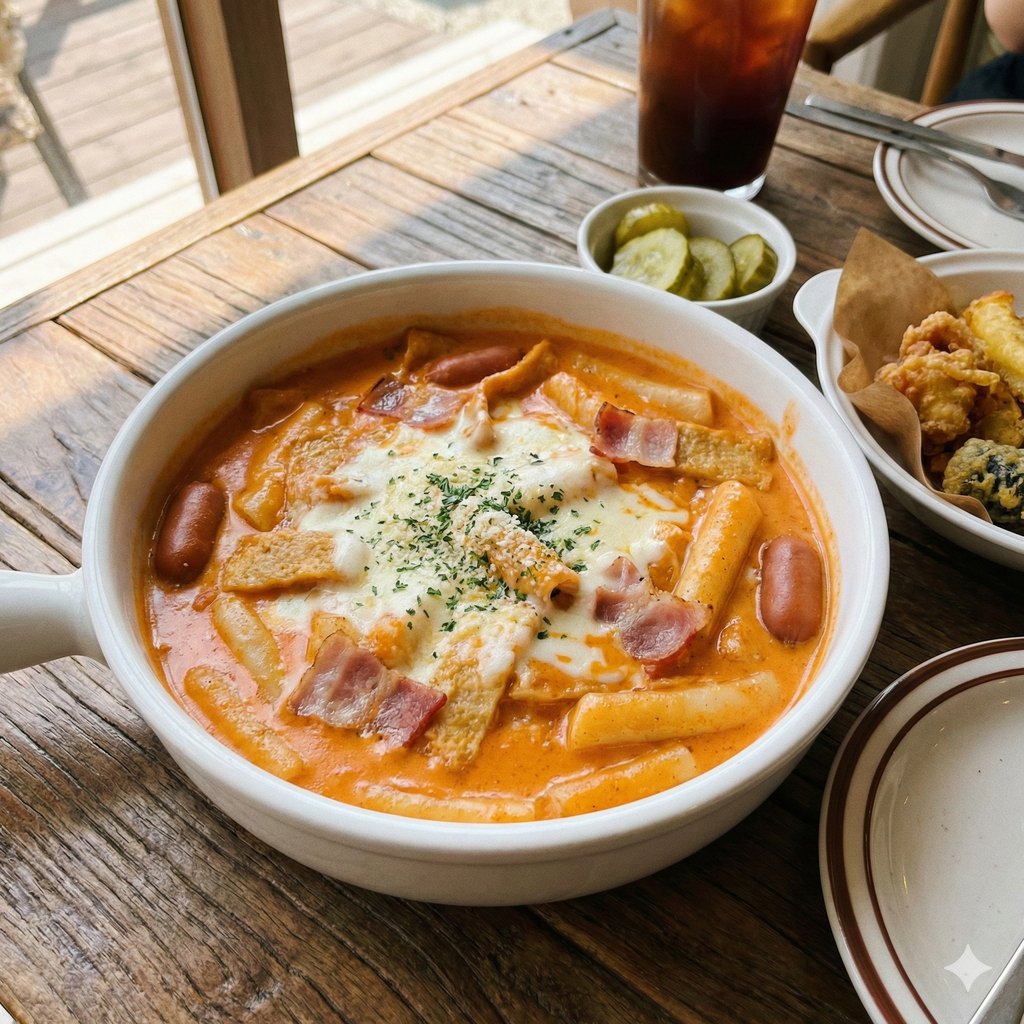
In the realm of viral gastronomy, few dishes represent a more efficient method of destroying one's metabolic health than Rosé Tteokbokki. While social media feeds are inundated with the creamy, orange-hued aesthetic of this dish, a cold, nutritional analysis reveals it to be a masterclass in hyper-palatable toxicity. Let us dispense with the culinary romanticism and look at the biochemistry. The foundation of this dish, the tteok (rice cake), is not a vegetable; it is a highly processed, compressed cylinder of refined white rice flour. Unlike whole grains, the fibrous hull and germ have been stripped away, leaving only the endosperm—pure starch. Scientifically, this results in a product with a Glycemic Index (GI) soaring above 85. When you consume these dense starch plugs, your body does not treat them as food; it treats them as a glucose injection. The mechanical density of tteok means that a standard 200g serving contains upwards of 500 calories of pure carbohydrates before a drop of sauce is even added. You are essentially ingesting flavorless glue that rapidly converts to blood sugar, demanding a massive insulin response from your pancreas. Over time, repeated exposure to this level of glycemic load is a direct precursor to insulin resistance and metabolic syndrome. There is no nutritional redemption here—no fiber, no vitamins, just empty, dense energy waiting to be stored as visceral fat. 🧪
If the rice cakes are the metabolic kindling, the 'Rosé' sauce is the arsonist. Do not confuse this with a light, tomato-based pasta sauce. In the context of Korean delivery food, 'Rosé' denotes a slurry of heavy cream (or vegetable oil-based non-dairy creamer) mixed with Gochujang (fermented chili paste) and significant amounts of added sugar. Let us analyze the lipid profile. A single serving of delivery Rosé Tteokbokki often contains over 40 grams of saturated fat—double the American Heart Association’s recommended daily limit. This comes from the heavy cream, which acts as a vehicle for caloric density without satiety. Furthermore, the Gochujang used in commercial kitchens is rarely the traditional, fermented probiotic food of the past; it is an industrial product where the primary ingredients are often corn syrup and wheat flour. Consequently, the sauce is a scientifically engineered 'bliss point' trap, combining high fat (50%+ of calories) with high sugar. This specific combination disrupts the body's satiety signaling hormones, leptin and ghrelin, effectively blinding your brain to the fact that you have consumed enough energy for an entire day. You keep eating not because you are hungry, but because your dopaminergic reward system is being hijacked by a chemical cocktail. 📉
The toxicity of this dish is further compounded by the standard 'add-ins' that accompany the base. It is rarely just rice cakes; the dish is frequently bulked up with cheap sausages, bacon, and Chinese glass noodles. From an oncological perspective, the inclusion of processed meats is alarming. The World Health Organization (WHO) classifies processed meats containing nitrates and nitrites as Group 1 carcinogens—in the same category as tobacco smoking and asbestos. When these sausages are boiled in the hot, fatty sauce, lipid oxidation occurs, potentially creating further carcinogenic compounds. Additionally, the glass noodles, often perceived as 'light,' are made from sweet potato starch and are even more calorically dense by weight than the rice cakes. They act as sponges, absorbing the sodium-laden lipid emulsion of the sauce. Speaking of sodium, a standard portion of Rosé Tteokbokki is a hypertensive nightmare, frequently clocking in at 2,500mg to 3,000mg of sodium. That is 130% of the recommended daily maximum in a single sitting. This extreme sodium load forces the vascular system to retain water to dilute the blood, increasing blood volume and placing immense mechanical stress on arterial walls and the kidneys.
In conclusion, Rosé Tteokbokki is not a meal; it is a physiological assault. When you sum the components—refined starch, oxidized saturated fats, liquid sugars, nitrates, and excessive sodium—you are left with a dish that provides approximately 1,500 to 2,500 calories per bowl. To burn off this single meal, an average adult male would need to run at a moderate pace for approximately 2.5 to 3 hours. The aftermath of consuming this is not 'satisfaction'; it is a state of metabolic inflammation, water retention (bloating), and a reactive hypoglycemia crash that follows the initial sugar spike. As a health-conscious individual who views food as fuel, I cannot find a single metric by which this dish is acceptable. It is a triumph of food engineering designed to exploit human biology for profit, leaving your body to clean up the cellular debris. If you value your vascular health and insulin sensitivity, look away. 🛑
📌 Truth Summary
- Sodium Toxicity: A single serving contains >2,500mg of sodium, causing immediate vascular stress and bloating.
- Insulin Spike: Refined rice flour (GI >85) combined with liquid sugar forces a massive, damaging insulin response.
- Carcinogen Risk: Cheap sausages and bacon add Group 1 carcinogens (nitrates) to an already toxic mix.
- Caloric Surplus: One portion exceeds 1,500 calories, composed almost entirely of saturated fats and refined carbs.