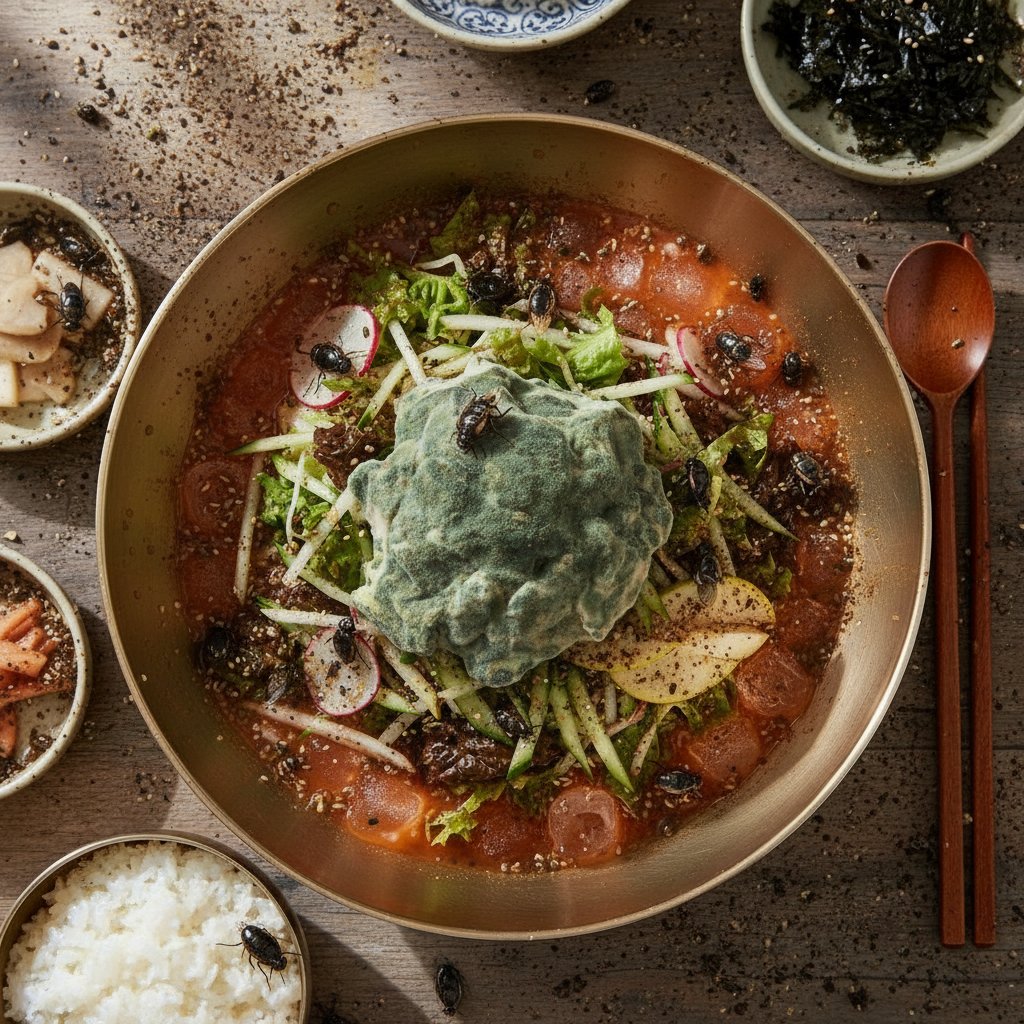
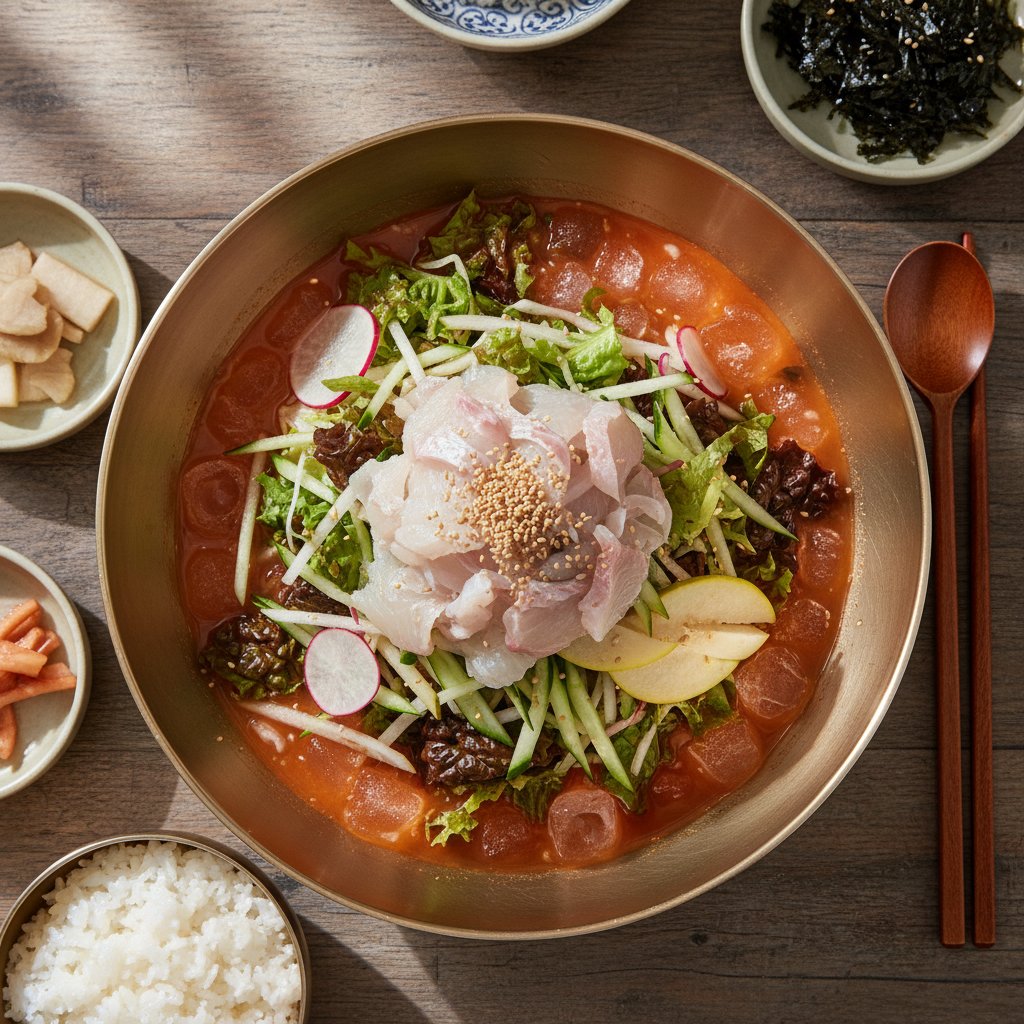
If you believe that ordering Mulhoe (Raw Fish Soup) constitutes a healthy, low-calorie choice simply because it features seafood, you are operating under a dangerous delusion. At 'Temperature & Taste', we do not cater to the romanticized notion of 'refreshing' summer delicacies; we analyze the biochemical reality of what you are ingesting. While plain sashimi offers a respectable profile of lean protein and Omega-3 fatty acids, Mulhoe systematically destroys these benefits by drowning the fish in a toxic sludge of processed carbohydrates, excessive sodium, and refined sugars. The dish is an optical illusion of health. You see fresh vegetables and raw fish, but your pancreas and kidneys see a metabolic assault. The base of this soup is rarely a natural stock; in the vast majority of commercial establishments, it is a slurry of water, high-fructose corn syrup (or copious amounts of white sugar), vinegar, and commercial Gochujang (chili paste). Let us be brutally honest about the numbers: a single serving of this broth can easily contain over 80 grams of sugar—equivalent to two cans of soda—dissolved into the liquid to counteract the acidity of the vinegar and the heat of the chili. You are essentially eating your protein in a bath of spicy dessert syrup ❄️.
The sodium content in Mulhoe is frankly alarmed. A standard bowl often exceeds 3,000mg of sodium, which is 150% of the World Health Organization's recommended daily maximum intake limit of 2,000mg. This is not merely 'salty'; it is a hypertensive event in a bowl. The primary culprit is the commercial Gochujang and the additional soy sauce or MSG-laden seasoning powders used to create that 'addictive' umami punch. Commercial chili paste is not the fermented health product of the past; it is an ultra-processed amalgam of wheat flour (refined gluten), corn syrup, salt, and preservatives like potassium sorbate. When you consume this hypertonic solution, your body is forced to retain water to dilute the sodium concentration in your bloodstream, placing immense strain on your vascular system and kidneys. This immediate fluid retention mimics bloating, but the long-term effects on arterial stiffness are far severe. Furthermore, the combination of high sodium and high sugar creates a 'bliss point' that overrides your satiety hormones, leptin and ghrelin, encouraging you to consume the entire volume of this liquid poison.
Beyond the metabolic havoc caused by the broth, we must address the microbiological roulette involved in consuming raw seafood in a soup format, particularly during the summer months when this dish is most popular. Unlike sashimi served on a dry, chilled plate, Mulhoe submerges the fish in a liquid that may vary in temperature as the ice melts. While the broth is cold, it is not a sterilizing agent. In fact, the sugar-rich environment can feed bacterial growth if the temperature regulation fails even slightly. We are looking at risks of Vibrio vulnificus, a flesh-eating bacterium that thrives in warm seawater and can contaminate seafood, leading to septicemia in immunocompromised individuals. Moreover, there is the ever-present threat of Anisakis simplex, a parasitic nematode often found in flounder and rockfish used for Mulhoe. While proper freezing kills these parasites, many 'fresh' preparations skip this step for texture. If you consume a live larva, it can burrow into your gastric wall, causing acute abdominal pain often mistaken for food poisoning. The heavy seasoning of the broth serves to mask any off-flavors indicating early spoilage or histamine formation (scombroid poisoning), which plain sashimi would reveal immediately 🧪.
Finally, the consumption method of Mulhoe compounds its glycemic impact. It is rarely eaten as a standalone protein soup; it is standard practice to dump a serving of Somyun (wheat flour noodles) or a bowl of white rice into the leftover broth. From a nutritional standpoint, this is catastrophic. You are taking refined simple carbohydrates (noodles/rice) and coating them in liquid sugar and sodium. This results in an immediate, sharp spike in blood glucose, triggering a massive insulin response. Because the liquid passes through the stomach faster than solid food, the absorption rate of the sugar is accelerated. This is not a balanced meal; it is a recipe for insulin resistance. The 'cooling' sensation you feel is merely thermal distraction from the inflammatory cascade initiating in your gut. If you value your metabolic health, consume the fish raw and dry, and leave the toxic red slush in the kitchen.
📌 Truth Summary
- Hypertensive Sodium Levels: A single bowl contains upwards of 3,000mg of sodium (150% of the daily limit), largely from processed Gochujang and flavor enhancers.
- Glycemic Disaster: The broth is chemically engineered with high-fructose corn syrup or sugar to mask acidity, often exceeding 80g of sugar per serving before noodles are even added.
- Microbiological Masking: The spicy, sweet liquid masks off-flavors of spoiling fish, increasing the risk of consuming histamine or unnoticed parasites like Anisakis.
- Ultra-Processed Additives: Commercial bases rely on wheat flour fillers, preservatives, and MSG rather than natural fermentation, contributing to systemic inflammation.