
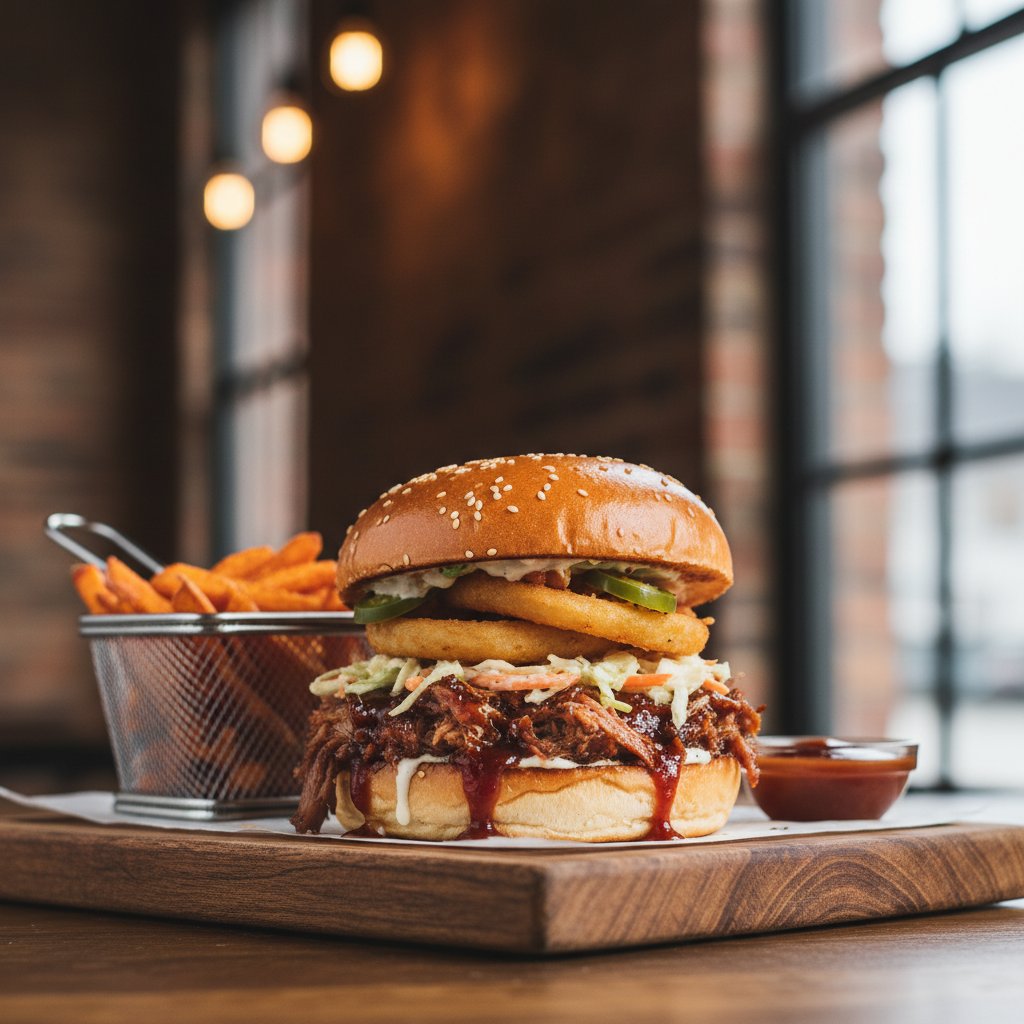
When you look at a pulled pork burger, you likely see a 'comfort food' masterpiece: tender meat falling apart after hours of low-and-slow cooking, glistening with sauce. When I look at it, I see a calculated assault on your metabolic stability. Let’s strip away the marketing romance of the 'pitmaster' and look at the biochemistry. The primary ingredient, pork shoulder (often referred to as the Boston Butt), is one of the fattiest, cheapest cuts of the animal. While proponents claim the fat 'renders out' during the cooking process, the reality is far more grim. The long cooking duration does breakdown collagen, but it also allows the meat to bathe in its own liquified lipids for hours. A standard 6-ounce serving of pulled pork—before the sauce is even applied—contains approximately 14 grams of saturated fat. That is nearly 70% of the American Heart Association's daily limit. Furthermore, if this meat is smoked, which is the standard preparation method, you are ingesting a significant load of Polycyclic Aromatic Hydrocarbons (PAHs) and Heterocyclic Amines (HCAs). These are mutagenic compounds formed when muscle meat is cooked at high temperatures or exposed to smoke 📉. Essentially, that 'smoky ring' you prize is a ring of carcinogenic potential.
Then, we must address the glaze. Pulled pork is rarely served naked; it is heavily shredded and mixed with barbecue sauce to mask the dryness that often occurs from overcooking. From a nutritional standpoint, barbecue sauce is one of the most deceptive condiments in existence. It is essentially ketchup that has been engineered to be more addictive through the addition of liquid smoke and molasses. A typical pulled pork burger contains upwards of 40 to 50 grams of sugar—more than a can of soda—hidden entirely within the savory profile of the meal. Most commercial BBQ sauces utilize High Fructose Corn Syrup (HFCS) as the primary sweetener. Unlike glucose, which can be utilized by every cell in your body for energy, fructose is metabolized almost exclusively by the liver. When you slam your liver with this concentrated dosage of liquid fructose alongside a high-fat meat bolus, you are creating the perfect storm for de novo lipogenesis (the creation of new fat) and hepatic insulin resistance. You aren't just eating lunch; you are actively stressing your pancreatic function.
We cannot ignore the structural components: the bun and the 'vegetable' garnish. The bun is invariably a brioche or a refined white flour roll. It provides zero fiber and acts as a rapid-delivery vehicle for glucose, spiking your blood sugar just minutes after ingestion. This spike, combined with the saturated fat from the pork, induces a state of postprandial lipemia, where fat thickens the blood and impairs endothelial function (the ability of your blood vessels to dilate) for hours. And the coleslaw? Do not mistake this for a healthy addition. It is cabbage drowning in industrial-grade mayonnaise. This means you are consuming soybean or canola oil, which are high in Omega-6 linoleic acid. When consumed in excess—as they are in this burger—Omega-6 fatty acids serve as precursors to pro-inflammatory eicosanoids. You are pairing the inflammation of oxidized seed oils with the inflammation of processed sugar and meat. It is a synergistic failure of nutrition.
Finally, let’s look at the numbers that matter: the electrolyte imbalance. A single restaurant-style pulled pork burger frequently contains between 1,800mg and 2,500mg of sodium. To put that in perspective, the ideal physiological requirement for the human body is under 1,500mg for the entire day. Consuming this massive sodium load in one sitting forces your body to retain water to dilute the toxicity in your bloodstream, increasing blood volume and placing immediate mechanical stress on your arterial walls 🥩. This leads to the lethargy often jokingly referred to as a 'food coma,' which is actually your body diverting massive amounts of energy to digestion and crisis management. When you combine 1,000+ calories, 50g of sugar, and a day’s worth of sodium into one handheld item, you are not nourishing yourself. You are engaging in a recreational activity that damages your cellular health. My verdict is simple: there is no 'healthy version' of this dish. It is a metabolic wrecking ball.
📌 Truth Summary
- Carcinogenic Exposure: The smoking process generates Polycyclic Aromatic Hydrocarbons (PAHs) and Heterocyclic Amines (HCAs), which are scientifically linked to DNA mutation and cancer risk.
- Glycemic Disaster: Hidden sugars in BBQ sauce (often High Fructose Corn Syrup) combined with refined buns cause massive insulin spikes and promote liver fat accumulation.
- Sodium Toxicity: A single burger can exceed 2,000mg of sodium, causing immediate water retention, arterial stiffness, and elevated blood pressure.
- Inflammatory Oils: The coleslaw and cheap mayonnaise garnish are rich in oxidized Omega-6 fatty acids, fueling systemic inflammation when paired with saturated animal fats.