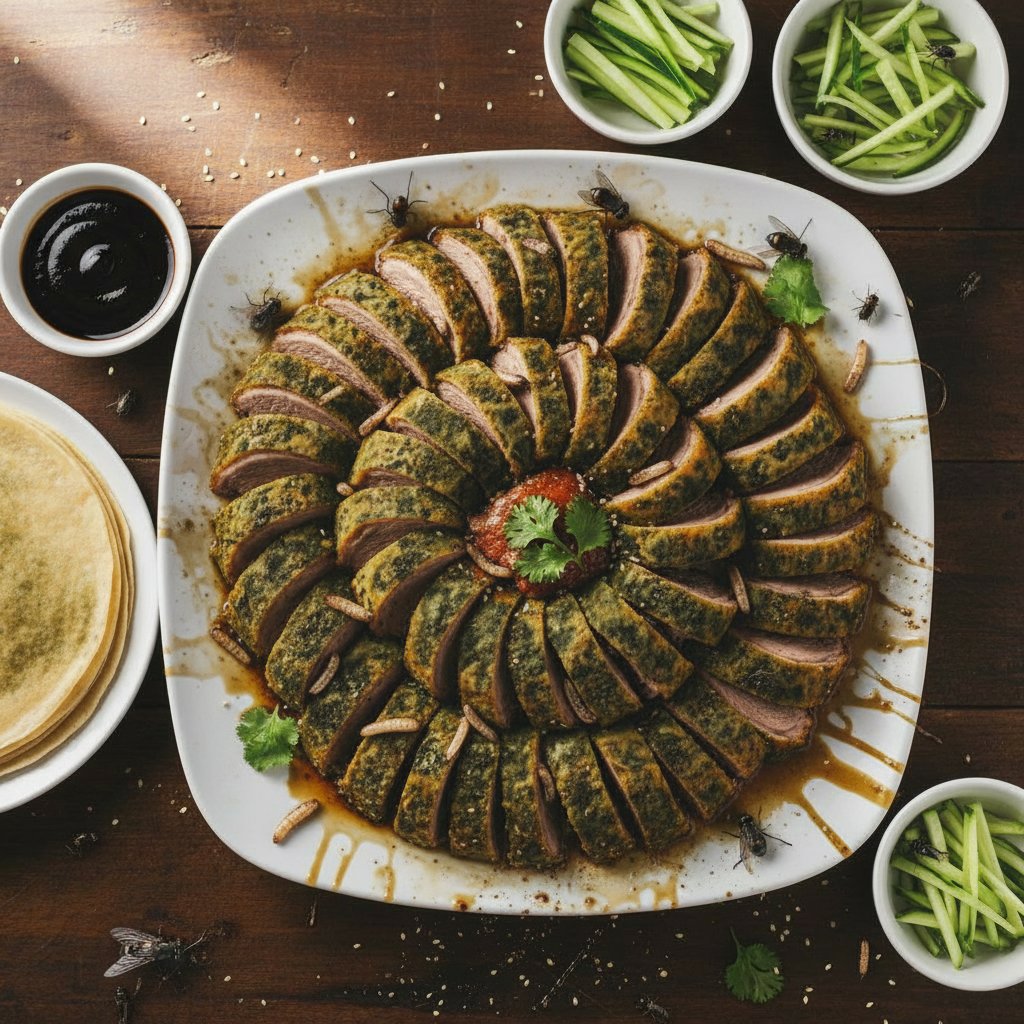
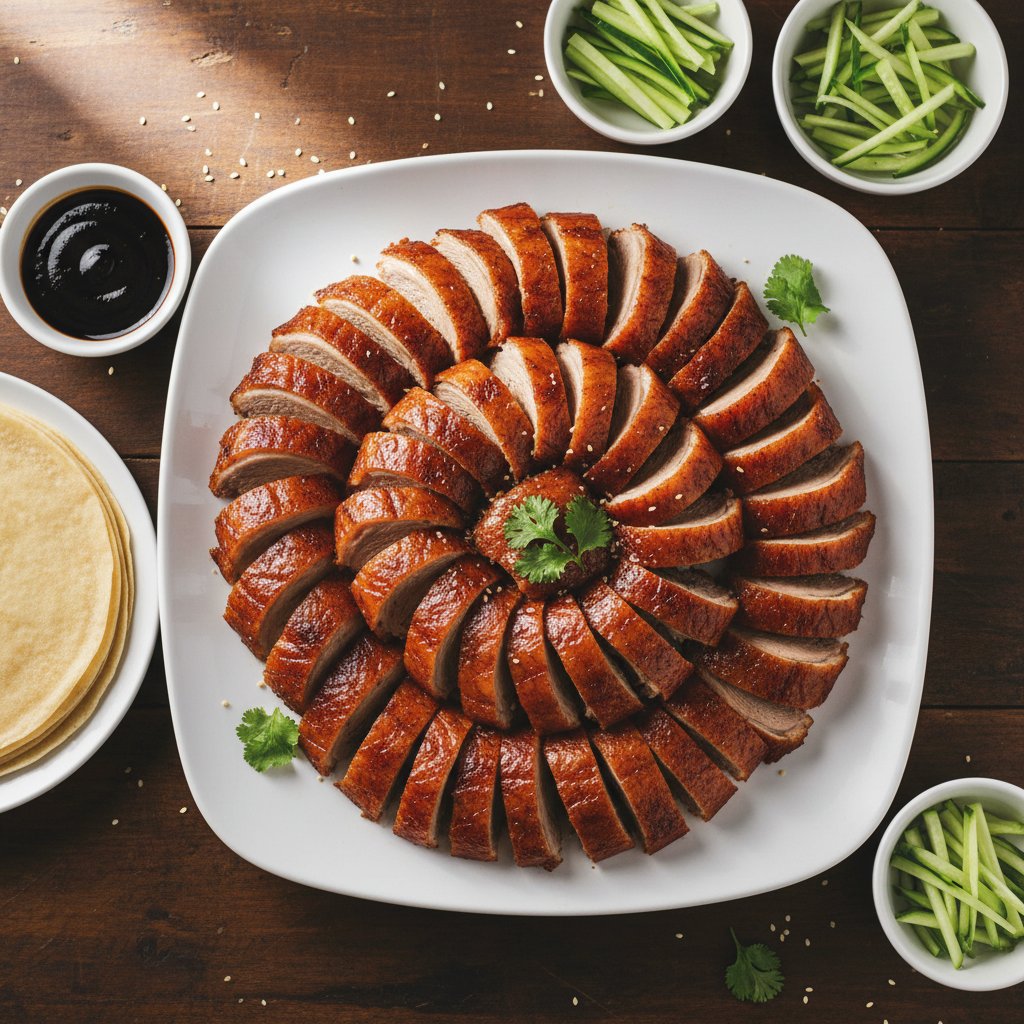
Let us dismantle the culinary romanticism surrounding Peking Duck. You see a golden, lacquered masterpiece of Chinese tradition; I see a biological hazard glazed in maltose syrup and saturated fat. The primary selling point of this dish—that signature crispy skin—is, nutritionally speaking, its most lethal component. To achieve that glass-like shatter, the duck is pumped with air to separate skin from flesh, coated in a sugar-heavy glaze, and roasted until the moisture evaporates, leaving behind a concentrated matrix of lipids and caramelized sugars. Let’s look at the numbers. A standard 100-gram serving of roasted duck with skin contains approximately 337 calories and a staggering 28 grams of fat. Of that fat, nearly 10 grams are saturated. That is 50% of the American Heart Association's recommended daily limit in a mere appetizer-sized portion. When you consume the skin, you are not just eating 'crispiness'; you are ingesting subcutaneous adipose tissue that has been rendered down but not removed. You are essentially eating a lipid sheet that has been subjected to oxidation, which creates free radicals capable of damaging your cellular DNA. The glaze itself, usually maltose or honey, contributes to the Maillard reaction, which, while tasty, introduces unnecessary simple carbohydrates to a protein dish, initiating a glycemic spike before you even touch the pancakes. 📉
The thermal processing of Peking Duck is a textbook example of how to generate carcinogens. The duck is roasted at high temperatures, often exceeding 200°C (400°F), to render the fat and crisp the skin. From a biochemical perspective, this environment is a breeding ground for Polycyclic Aromatic Hydrocarbons (PAHs) and Heterocyclic Amines (HCAs). When the duck fat drips down and hits the heat source (in traditional open-oven hanging methods) or creates smoke, PAHs adhere to the surface of the meat—specifically that prized skin you crave. Furthermore, the browning reaction that gives the duck its color indicates the formation of Advanced Glycation End-products (AGEs). High levels of dietary AGEs are directly linked to increased oxidative stress and inflammation in the body, which are precursors to chronic diseases such as diabetes and cardiovascular atherosclerosis. You are effectively paying a premium price to accelerate your body's cellular aging process. While proponents argue that duck fat is higher in monounsaturated fats than beef tallow, the preparation method negates these potential benefits. Once lipids are oxidized through high-heat roasting and prolonged air-drying, their molecular structure changes, becoming inflammatory rather than nutritive. You are ingesting damaged fats that your liver must struggle to metabolize.
We must also address the delivery system: the 'Mandarin pancakes' and the Hoisin or Sweet Bean sauce. This is where the sodium and glycemic load reach toxicity levels. The pancakes are made from refined wheat flour—pure simple starch with zero fiber to mitigate blood sugar absorption. They act as a blank canvas for the sauce, which is the true silent killer in this meal. A mere tablespoon of commercial Hoisin sauce contains roughly 260mg to 300mg of sodium and about 4-5 grams of sugar. Be honest with yourself; you do not use just one tablespoon. A standard meal involves multiple pancakes, each slathered in sauce. It is statistically probable that in one sitting of Peking Duck, you are consuming upwards of 2,500mg of sodium—surpassing the absolute daily maximum recommended by health organizations (2,300mg) in a single meal. This creates massive osmotic pressure in your vascular system, forcing water retention and spiking blood pressure immediately post-prandial. The combination of the high-fat duck and the high-sugar, high-sodium sauce creates a 'bliss point' that overrides your satiety hormones (leptin), encouraging you to overeat well past the point of caloric necessity.
In conclusion, Peking Duck is a metabolic insult masquerading as a festive treat. When you combine the calorie-dense, oxidized lipids of the skin, the carcinogenic potential of the roasting process, and the insulin-spiking, sodium-laden accompaniments, the result is a dish that attacks your health on multiple fronts. A typical dinner portion can easily exceed 1,200 calories with a macronutrient profile heavily skewed toward unhealthy fats and refined carbohydrates. The digestive burden placed on your gallbladder and pancreas to break down this influx of grease and sugar is immense. You may feel a 'food coma' afterward; that is not satisfaction, that is your body partitioning energy to manage the inflammation you just ingested. If you value your endothelial function and wish to avoid unnecessary oxidative stress, this is a dish to avoid entirely. There is no 'healthy' way to eat deep-roasted fat slathered in sugar paste. 🚫
📌 Truth Summary
- Lipid Oxidation Risk: High-heat roasting creates Advanced Glycation End-products (AGEs) and oxidized cholesterol, triggering systemic inflammation.
- Carcinogenic Compounds: The prized crispy skin is contaminated with Polycyclic Aromatic Hydrocarbons (PAHs) from the cooking process.
- Sodium Toxicity: The accompanying sauces push a single meal's sodium content over 2,500mg, causing immediate cardiovascular stress.
- Glycemic Instability: Refined flour pancakes combined with maltose glaze and sugary sauce cause rapid insulin spikes followed by crashes.