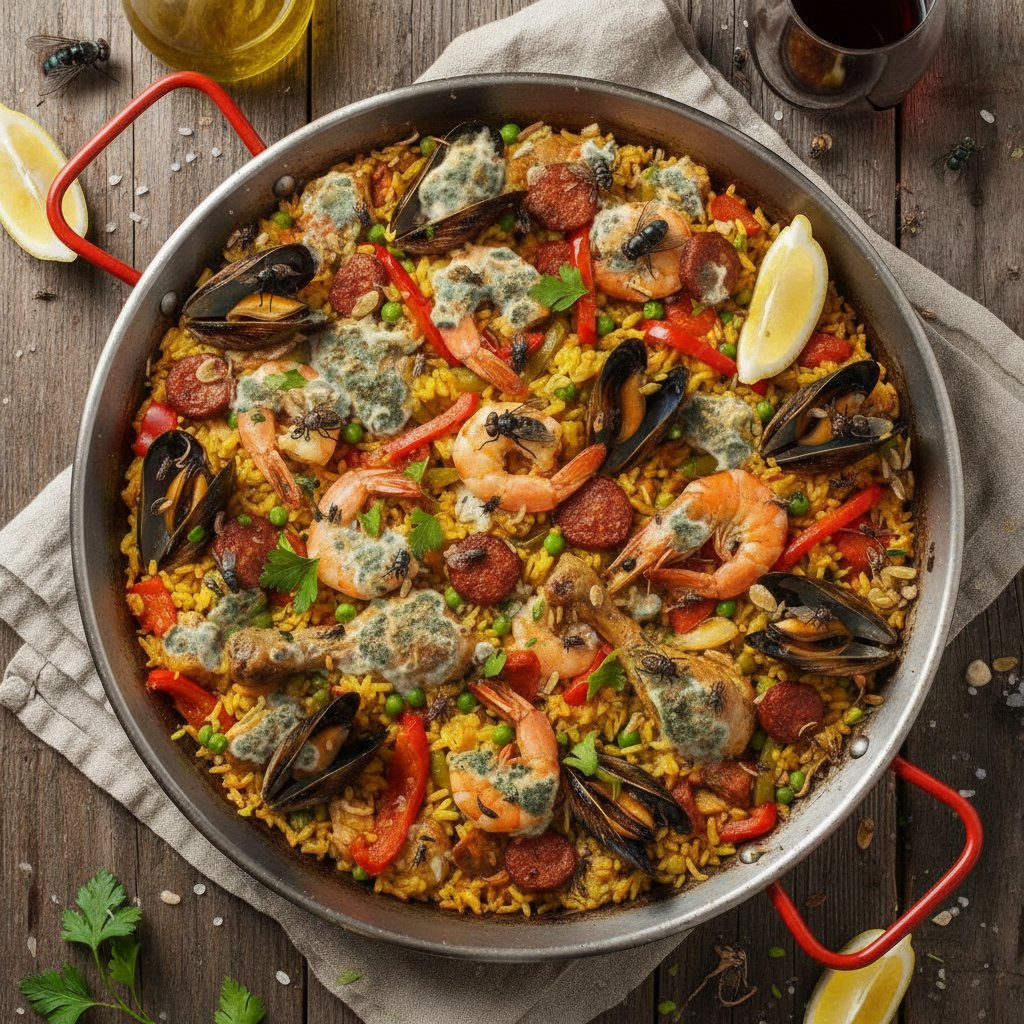
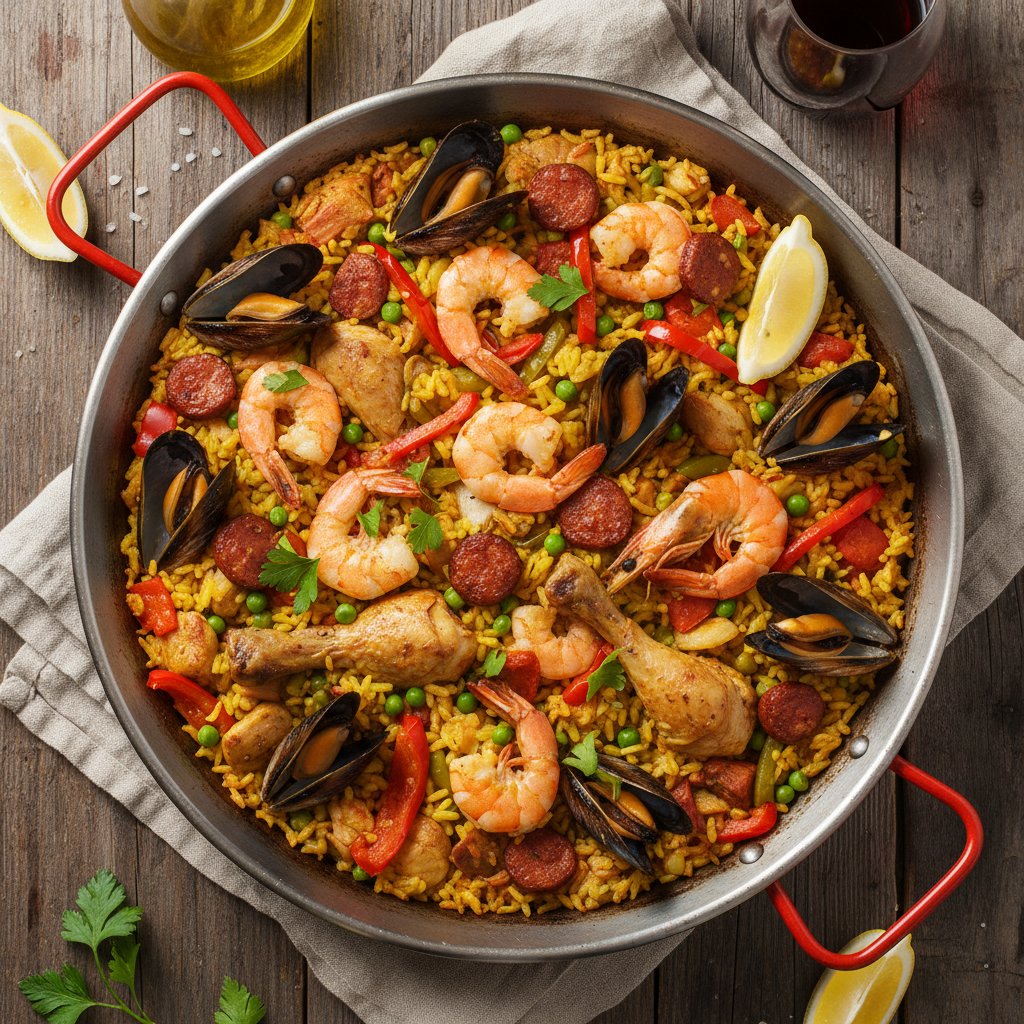
When you picture the Mediterranean diet, marketing campaigns have conditioned you to visualize a steaming pan of Paella, radiant with saffron and studded with seafood. You perceive it as the epitome of balanced nutrition—lean proteins, healthy fats, and grains. From a cold, analytical perspective, however, this perception is a dangerous delusion. Paella is, fundamentally, a metabolic assault disguised as cultural heritage. The primary offender is the base itself: Bomba or Calasparra rice. Unlike complex carbohydrates, these short-grain white rice varieties function as high-velocity glucose delivery systems. With a Glycemic Index (GI) hovering dangerously close to 72—essentially identical to pure sucrose—a standard 300-gram serving of Paella creates an immediate, violent spike in blood glucose levels. To your pancreas, there is little distinction between eating a plate of this 'golden' rice and consuming a bowl of sugar. The starch structure of Bomba rice is specifically cultivated to absorb three times its volume in liquid. While this is culinarily prized for flavor absorption, nutritionally, it means you are consuming a hyper-dense sponge of simple carbohydrates that have been stripped of fiber and germ. The result is a rapid secretion of insulin, promoting immediate fat storage and contributing to long-term insulin resistance. If you believe the few scattered peas and peppers in the pan will mitigate this glycemic load, you are scientifically illiterate regarding digestion rates 📉.
Beyond the glycemic catastrophe, we must address the cardiovascular strain induced by the dish's sodium and lipid profile. A restaurant-grade serving of Paella frequently exceeds 2,500mg of sodium—surpassing the recommended daily intake for an adult in a single sitting. This is not accidental; it is chemical engineering. The stock used to cook the rice is often a hyper-reduced bouillon, concentrating salt levels to create depth of flavor. Furthermore, many variations, particularly 'Paella Mixta,' incorporate processed meats like chorizo or serrano ham. These are not merely salty; they are vectors for nitrates and nitrites, preservatives linked to colorectal cancer and vascular hardening. Then there is the lipid load. While olive oil is chemically stable and rich in monounsaturated fats in its raw state, Paella preparation demands that the rice literally swims in oil to prevent sticking before the final crust formation. We are talking about caloric density that can easily push a single meal over 1,200 calories. This combination of high-glycemic starch and high dietary fat creates the perfect 'supra-additive' effect for the brain's reward center, overriding satiety signals and encouraging overconsumption, while simultaneously inducing post-prandial inflammation in the endothelial lining of your arteries 🚫.
Perhaps the most insidious element of Paella is the very feature gourmands fetishize: the *socarrat*. This is the caramelized, crunchy layer of rice at the bottom of the pan. Chefs present this as a culinary triumph; I identify it as a carcinogenic hazard. The chemical process required to create socarrat is not merely the Maillard reaction (browning); it often crosses into pyrolysis (burning). When starchy foods are subjected to high temperatures for prolonged periods until they darken significantly, they form acrylamide. Acrylamide is a chemical compound classified by the International Agency for Research on Cancer as a Group 2A probable carcinogen. By scraping that burnt crust into your mouth, you are ingesting a concentrated dose of DNA-damaging compounds. Furthermore, the fats trapped at the bottom of the pan during this high-heat searing process undergo oxidation. Consuming oxidized lipids introduces free radicals into your system, accelerating cellular aging and oxidative stress. You are essentially paying a premium to eat burnt starch and degraded fats, convincing yourself it is 'texture' rather than toxicity.
Finally, we must scrutinize the ingredient integrity and sourcing risks often hidden by the yellow hue of the rice. Authentic Paella uses saffron (Crocus sativus), which contains antioxidants like crocin. However, real saffron is the most expensive spice on earth. In 90% of commercial and tourist-focused Paella, the yellow color is achieved not through saffron, but through Tartrazine (Yellow 5) or 'Colorante Alimentario.' Tartrazine is a synthetic azo dye linked to hypersensitivity reactions and, in some studies, neurotoxicity and attention deficits in children. Additionally, the shellfish typically buried in the rice—mussels, clams, and prawns—are often bottom-feeders that bioaccumulate heavy metals. The heads of prawns, which are traditionally sucked for flavor, concentrate cadmium, a heavy metal toxic to the kidneys. When you combine the synthetic dyes, the heavy metal exposure from non-vetted seafood, the acrylamide from the burnt crust, and the massive insulin spike from the refined rice, Paella reveals itself not as a health food, but as a chemically complex bio-hazard ⚠️.
📌 Truth Summary
- Glycemic Assault: Bomba rice acts as a high-GI refined carbohydrate (GI ~72), causing massive insulin spikes and promoting visceral fat storage.
- Carcinogenic Crust: The prized socarrat contains acrylamide, a toxic byproduct of overheating starch, alongside oxidized, inflammatory lipids.
- Sodium Toxicity: A single serving often exceeds 2,500mg of sodium due to reduced broths and cured meats, stressing the cardiovascular system.
- Chemical Fraud: Most commercial versions replace antioxidant-rich saffron with Tartrazine (Yellow 5), a synthetic dye linked to hypersensitivity and neurotoxicity.