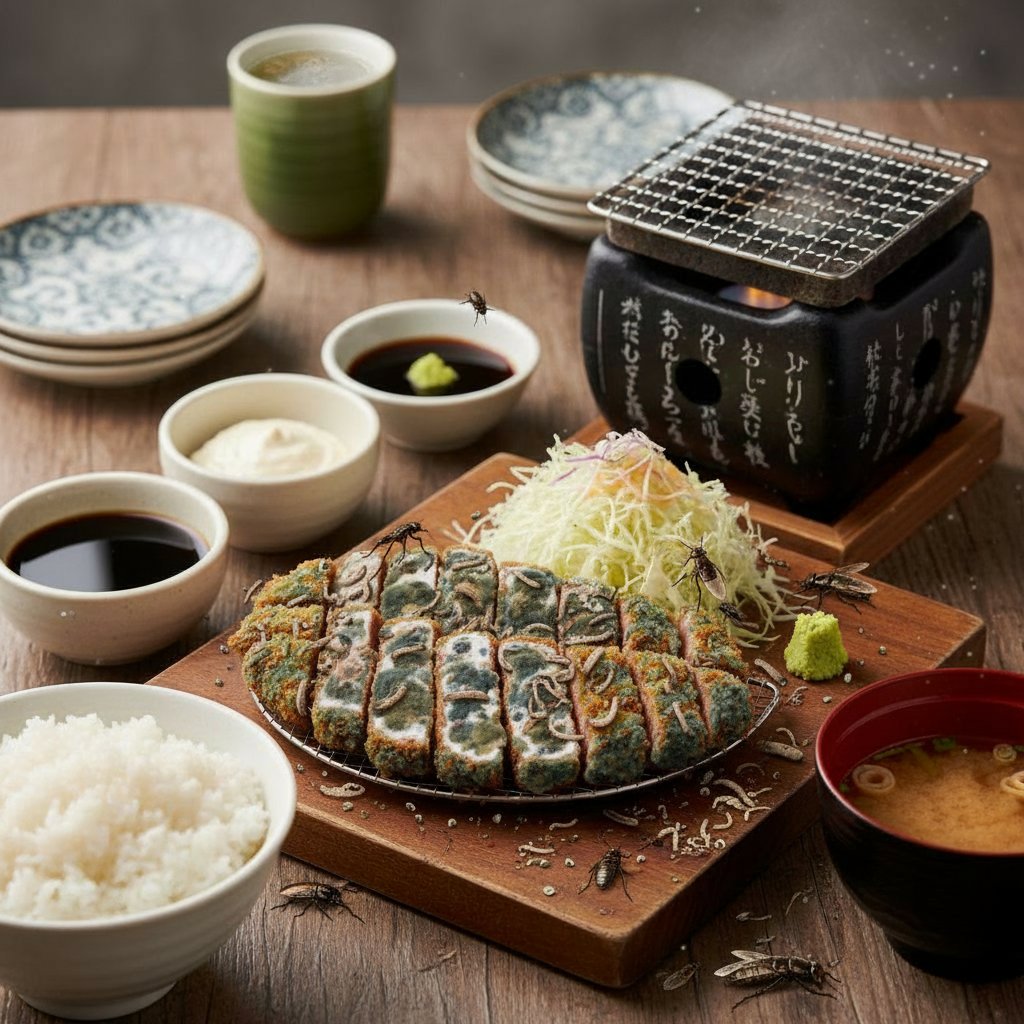
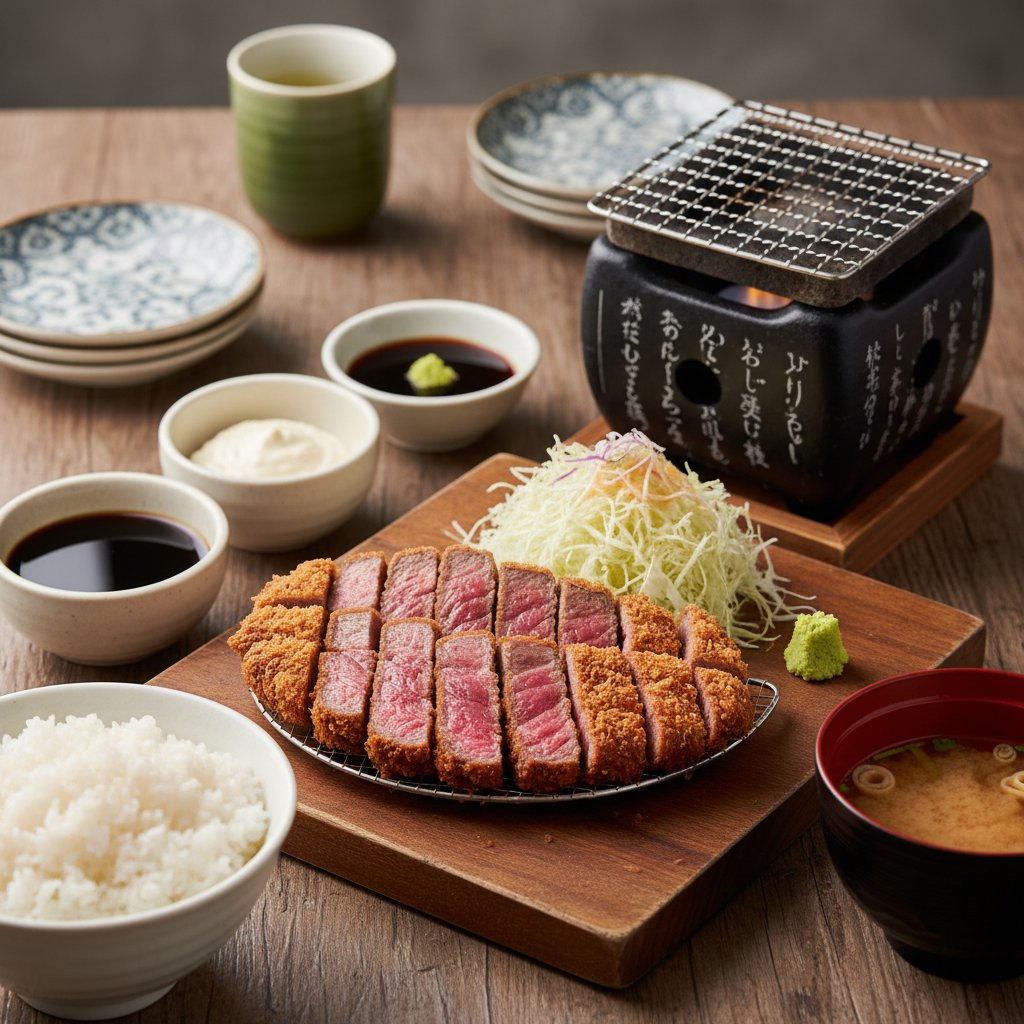
In the modern culinary landscape, few dishes successfully masquerade as 'refined' while delivering such a potent biological insult as Gyukatsu. While social media feeds are saturated with slow-motion videos of rare beef sizzling on personal stone grills, my analysis reveals a different picture: a masterclass in inflammatory inputs. Let us strip away the aesthetics and look at the thermodynamics and biochemistry. Gyukatsu is essentially a high-fat cut of beef, breaded in refined carbohydrates (panko), deep-fried in oxidized seed oils, and then cauterized again on a hot plate. It is a dual-phase cooking process designed to maximize the formation of Advanced Glycation End-products (AGEs). The panko crust, often praised for its texture, acts as a hyper-absorbent sponge. Scientifically speaking, the porous structure of panko creates a massive surface area that maximizes oil uptake. When you consume a standard 200g serving of Gyukatsu, you are not merely eating beef; you are ingesting a matrix of heated lipids that have seeped into every crevice of the breading. If the establishment uses soybean or canola oil—which 90% of mid-range restaurants do to cut costs—you are subjecting your endothelium to a flood of Omega-6 fatty acids, specifically linoleic acid, which promotes systemic inflammation when consumed in the ratios present here. 📉
Let’s discuss the protein source itself. Gyukatsu typically utilizes cuts with high intramuscular fat, or in many deceptive cases, 'meltique' beef—meat that has been mechanically injected with soluble fat and additives to simulate marbling. Even assuming a high-quality cut, the health implications are grim. The World Health Organization classifies red meat as a Group 2A carcinogen. However, Gyukatsu compounds this risk through the Maillard reaction run amok. When the meat is flash-fried, and subsequently seared on the mini-stone grill at your table, the creatine and amino acids in the muscle meat react to form Heterocyclic Amines (HCAs). Research indicates that HCAs are potent mutagens. By searing the cutlet yourself on the stone to achieve that desired 'crust,' you are actively participating in the synthesis of carcinogenic compounds right before ingestion. You are essentially paying a premium to manage your own toxicity exposure. Furthermore, the juxtaposition of the raw interior and the burnt exterior is a nightmare for digestion; the heavy greasiness delays gastric emptying, leading to significant post-prandial bloating and lethargy as your body struggles to emulsify the sheer volume of triglycerides.
From a metabolic standpoint, the macronutrient profile of a standard Gyukatsu set is a chaotic spike of energy that the sedentary human body cannot effectively partition. A standard set meal, including the cutlet, rice, and potato salad, easily surpasses 1,200 calories. However, the caloric load is secondary to the insulin response. The combination of saturated fats from the beef and refined carbohydrates from the white rice and breading creates what is known as the 'supraphysiological stimulus' for fat storage. High circulating insulin levels (triggered by the rice and crust) lock open the doors of your adipose tissue, ushering in the dietary fats directly into storage. It is the perfect storm for visceral fat accumulation. Additionally, the 'cleansing' sides provided—usually a mound of shredded cabbage and miso soup—are statistically negligible in counteracting this damage. The cabbage provides minimal fiber relative to the caloric density of the meal, and the dressing is often sugar-laden. 🧪
Finally, we must address the electrolyte imbalance inherent in this dining experience. Gyukatsu is bland without its dipping sauces, which acts as the delivery mechanism for excessive sodium. Between the soy sauce, the wasabi salt, and the curry dipping sauce often provided, a single meal can contain upwards of 2,500mg of sodium—exceeding the American Heart Association's daily limit in one sitting. This induces immediate water retention, increasing blood volume and placing unnecessary mechanical stress on arterial walls. The miso soup adds another 600-800mg to this total. The immediate aftermath of a Gyukatsu meal is a state of physiological emergency: your liver is taxed by the influx of oxidized fats, your pancreas is straining to produce insulin, and your kidneys are struggling to excrete the sodium overload. It is a dish that prioritizes mouthfeel over mitochondrial function, offering a momentary sensory pleasure in exchange for measurable systemic inflammation.
📌 Truth Summary
- Carcinogenic Synthesis: Double-cooking (frying then stone-grilling) maximizes Heterocyclic Amine (HCA) formation, a known mutagen linked to colorectal cancers.
- Lipid Profile Disaster: The panko crust absorbs up to 40% of its weight in inflammatory, likely oxidized, Omega-6 seed oils.
- Metabolic Inflexibility: The combination of refined flour, white rice, and high saturated fat forces the body into peak fat-storage mode via insulin spikes.
- Sodium Toxicity: A single set meal routinely exceeds 2,500mg of sodium, causing immediate vascular stress and hypertension risks.