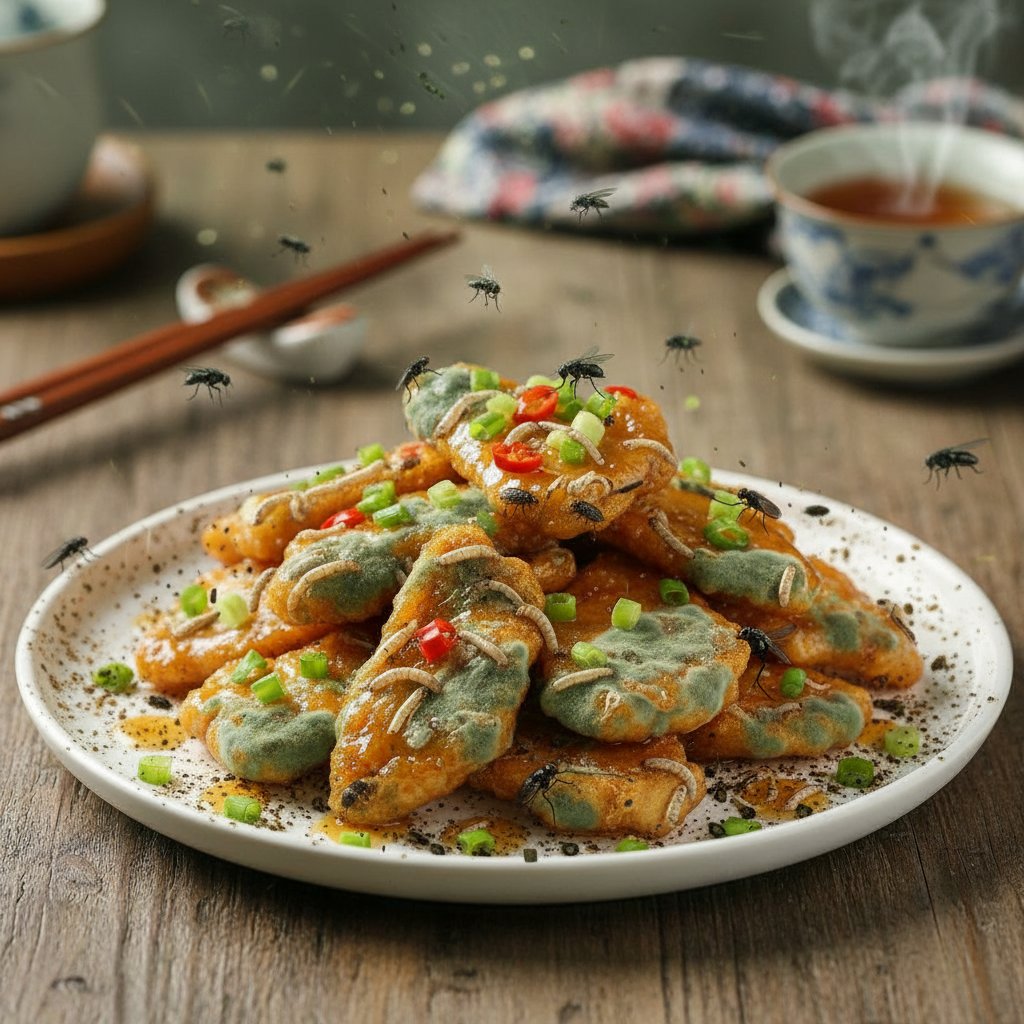
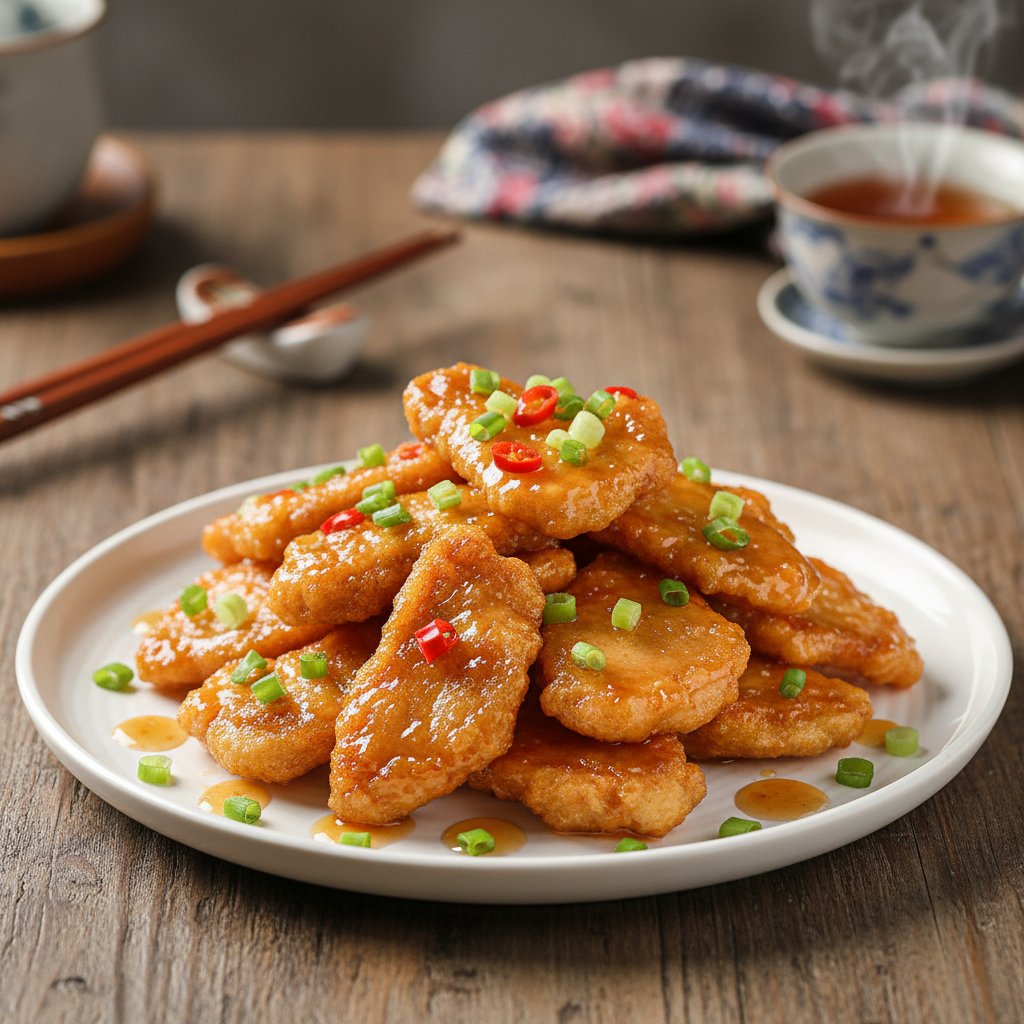
Welcome back to 'Temperature & Taste', where we strip away culinary nostalgia to reveal the biological reality on your plate. Today, we are dissecting a dish that has inexplicably gained cult status among the texture-obsessed: Guobaorou (꿔바로우). To the uneducated palate, it is a delightful interplay of crispy and chewy; to the analytical mind, it is a masterclass in nutritional destruction. The fundamental problem lies in its preparation method. Unlike standard fried foods, Guobaorou undergoes a 'double-frying' process. The pork cutlets, coated in a heavy potato or corn starch slurry, are submerged in oil at approximately 160°C to cook the meat, removed, and then plunged back into oil heated to over 180°C. While this achieves the desired porosity and crunch, it maximizes the formation of Acrylamide—a Group 2A probable carcinogen that forms when starchy foods are subjected to high temperatures. Furthermore, this second fry is not merely for texture; it is a dehydration event that replaces the water content of the batter with lipids. You are not eating pork; you are eating a starch sponge saturated in oxidized, likely distinctively high Omega-6 vegetable oils 📉. If the oil in the restaurant has been reused—a statistical certainty in the industry—you are also ingesting Total Polar Compounds (TPCs) and aldehydes, which are directly linked to cellular oxidative stress and inflammation.
Let us examine the 'sauce,' a euphemism for what is essentially a high-viscosity glucose syrup. The signature of Guobaorou is its sweet and sour profile, achieved through a reduction of vinegar, sugar, and aromatics. Do not be fooled by the presence of vinegar; its potential benefits for blood sugar regulation are completely nullified by the sheer volume of sucrose required to create that sticky glaze. A standard serving of Guobaorou can contain upwards of 40 to 50 grams of added sugar. When you combine this refined sugar with the refined starch of the batter (which consists largely of amylopectin, rapidly digesting into glucose), you create a dish with a Glycemic Index (GI) that rivals pure table sugar. Upon consumption, your blood glucose levels skyrocket, forcing your pancreas to dump insulin into the bloodstream. This promotes immediate fat storage, specifically visceral fat, and triggers a reactive hypoglycemic crash shortly after, leaving you lethargic and craving more simple carbohydrates. It is a metabolic disaster designed to bypass your satiety signals.
We must also address the caloric density and the sodium illusion. A typical 'sharing' portion of Guobaorou, which many individuals consume as a single meal, ranges from 900 to 1,200 calories. To put this in perspective, that is over 50% of the daily caloric requirement for an average adult male, condensed into a meal with negligible micronutrient density. The sodium content is equally alarming, often exceeding 1,500mg per dish due to the soy sauce base and added salt in the batter. The deception here is the 'sour' flavor masking the saltiness; because the vinegar and sugar compete for your taste receptors, the high sodium content goes unnoticed until you experience the inevitable bloating and water retention hours later. From a cardiovascular standpoint, the combination of high sodium (hypertension risk), high sugar (triglyceride spike), and oxidized fats (endothelial damage) creates a 'perfect storm' for arterial stiffening ☠️.
Finally, we cannot ignore the protein-to-fat ratio distortion. Proponents will argue that pork loin is a lean meat. This is factually true, but irrelevant in this context. The ratio of batter-to-meat in Guobaorou is significantly higher than in traditional sweet and sour pork (Tangsuyuk). By the time the pork is sliced thin, battered heavily, and fried twice, the protein content becomes a minor footnote in a macronutrient profile dominated by carbohydrates and fats. You are effectively eating deep-fried starch with a garnish of protein. The consumption of such High-Fat, High-Sugar (HFHS) foods disrupts the gut microbiome, reducing the population of beneficial bacteria like *Bifidobacteria* and increasing the permeability of the intestinal wall (leaky gut). This allows endotoxins to enter the bloodstream, triggering systemic low-grade inflammation. In conclusion, Guobaorou is not a meal; it is a recreational assault on your metabolic flexibility. It offers nothing but transient sensory pleasure at the cost of long-term cellular health 🧪.
📌 Truth Summary
- Carcinogenic Load: The double-frying method at temperatures exceeding 180°C accelerates the formation of Acrylamide and generates toxic aldehydes from oxidized oils.
- Glycemic Catastrophe: The combination of refined starch batter and high-sugar glaze creates a massive insulin spike, promoting immediate visceral fat storage and insulin resistance.
- Caloric Density: A single dish frequently exceeds 1,000 calories with a nutritional profile comprised almost entirely of empty carbohydrates and inflammatory fats.
- Sodium Deception: The sweet and sour flavor profile masks dangerous sodium levels (1,500mg+), causing significant water retention and cardiovascular strain.