
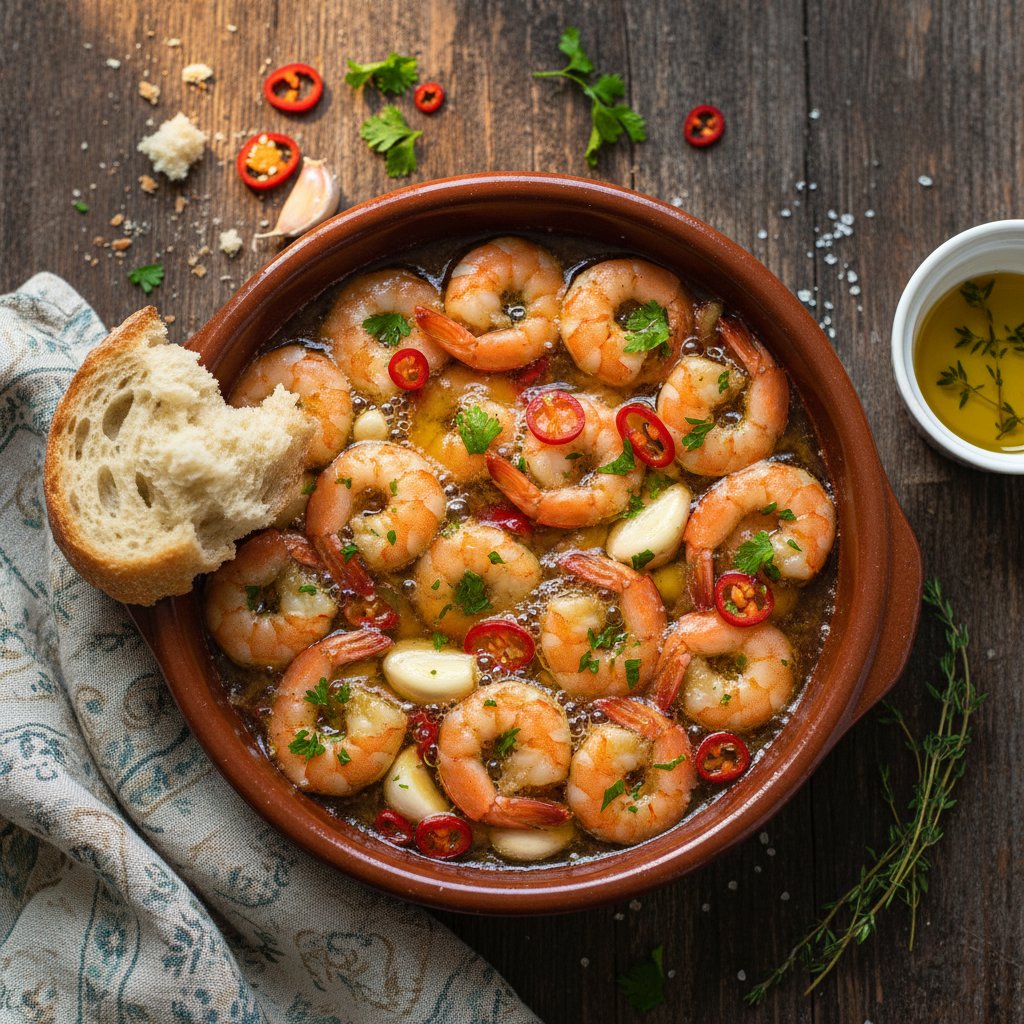
Let us dispense with the romanticized notion that anything labeled 'Mediterranean' is inherently beneficial for human physiology. Gambas al Ajillo, or Spanish garlic shrimp, is frequently touted as a healthy option due to its primary components: seafood and olive oil. However, an analytical breakdown of the macronutrient density and chemical alterations occurring during preparation reveals a far more sinister reality. This dish is essentially a caloric trap, utilizing the 'health halo' of olive oil to mask an excessive caloric surplus. Consider the thermodynamics: 1 gram of fat yields 9 kilocalories. A standard restaurant serving of Gambas al Ajillo is not merely sautéed; the shrimp are submerged in a bath of oil, often ranging from 100ml to 150ml per serving. Even assuming high-quality Extra Virgin Olive Oil (EVOO)—which is rarely the case in commercial settings due to cost—consumable oil volume alone contributes between 800 and 1,200 calories before you have ingested a single gram of protein. When you consume this dish, you are not eating a protein-forward meal; you are drinking liquefied lipids. The caloric density is staggering, often exceeding 50% of a standard adult’s Total Daily Energy Expenditure (TDEE) in a single appetizer. To ignore this mathematical reality is to invite rapid adipose tissue accumulation.
Furthermore, we must address the shrimp itself, specifically the industrial processing involved in modern seafood supply chains. While shrimp is naturally low in fat, it is chemically manipulated before it ever hits the sizzling skillet. The majority of commercially available shrimp, particularly those used in mid-range dining, are treated with Sodium Tripolyphosphate (STPP). This inorganic compound is used to retain moisture, artificially increasing the weight of the catch by absorbing water. Consequently, the sodium content skyrockets. Unprocessed shrimp contains approximately 150mg of sodium per 100g. However, STPP-treated shrimp can contain upwards of 800mg to 1,000mg of sodium for the same portion size. When you combine this with the generous pinch of sea salt added by the chef to cut through the heavy oil, a single serving can easily deliver 60% of your recommended daily sodium intake. This induces immediate water retention and places significant strain on the vascular system, elevating blood pressure. Additionally, while dietary cholesterol is debated, shrimp remains one of the most cholesterol-dense foods, containing roughly 189mg per 100g. For hyper-responders to dietary cholesterol, this dish represents a significant serological risk 📉.
The preparation method of Gambas al Ajillo is chemically volatile. The dish relies on the auditory and visual appeal of oil sizzling at high temperatures, often served in a clay pot that retains immense heat. Herein lies the biochemical hazard: lipid oxidation. While olive oil has a respectable smoke point, the localized temperature in a bubbling clay pot often exceeds 190°C (375°F), pushing the oil past its stability threshold. When unsaturated fats are subjected to this thermal stress, they undergo hydrolysis and oxidation, generating Lipid Oxidation Products (LOPs) such as aldehydes and lipid peroxides. These compounds are cytotoxic and mutagenic. Furthermore, the garlic, sliced thin and fried until golden or brown, introduces another variable. If the garlic creates a bitter, burnt flavor—common in amateur or rushed preparations—it indicates the formation of acrylamide, a known carcinogen formed by the Maillard reaction at high temperatures. You are not simply eating garlic oil; you are ingesting a cocktail of free radicals and oxidized fatty acids that promote systemic inflammation and oxidative stress at the cellular level.
Finally, the metabolic insult is compounded by the delivery mechanism: the white baguette. Gambas al Ajillo is rarely consumed in isolation; it is culturally mandatory to use refined white bread to 'sop up' the remaining garlic-infused oil. This creates a metabolic disaster known as the Randle Cycle effect. You are introducing a massive bolus of rapidly absorbing simple carbohydrates (High Glycemic Index) alongside a massive influx of dietary fat. The insulin spike caused by the refined flour locks open the pathways for fat storage, while the high concentration of free fatty acids in the blood impairs glucose oxidation. It is the perfect storm for inducing insulin resistance. You are effectively overriding your body's satiety signals and forcing your liver to process a deluge of energy it cannot expend, leading to de novo lipogenesis and visceral fat storage. From a cold, analytical perspective, this dish is not a light tapas option; it is a calculated attack on your metabolic flexibility 🧪.
📌 Truth Summary
- Caloric Density: A single serving often contains 100-150ml of oil, contributing 800-1200 calories of pure fat, disregarding the protein content.
- Chemical Contamination: Commercial shrimp are treated with Sodium Tripolyphosphate (STPP), artificially inflating sodium levels by up to 500% to increase water weight.
- Lipid Oxidation: High-heat sizzling in clay pots degrades olive oil into aldehydes and lipid peroxides, creating cytotoxic compounds that damage cellular health.
- Metabolic Gridlock: Pairing high-fat oil with high-GI white bread triggers the Randle Cycle, maximizing fat storage and promoting acute insulin resistance.