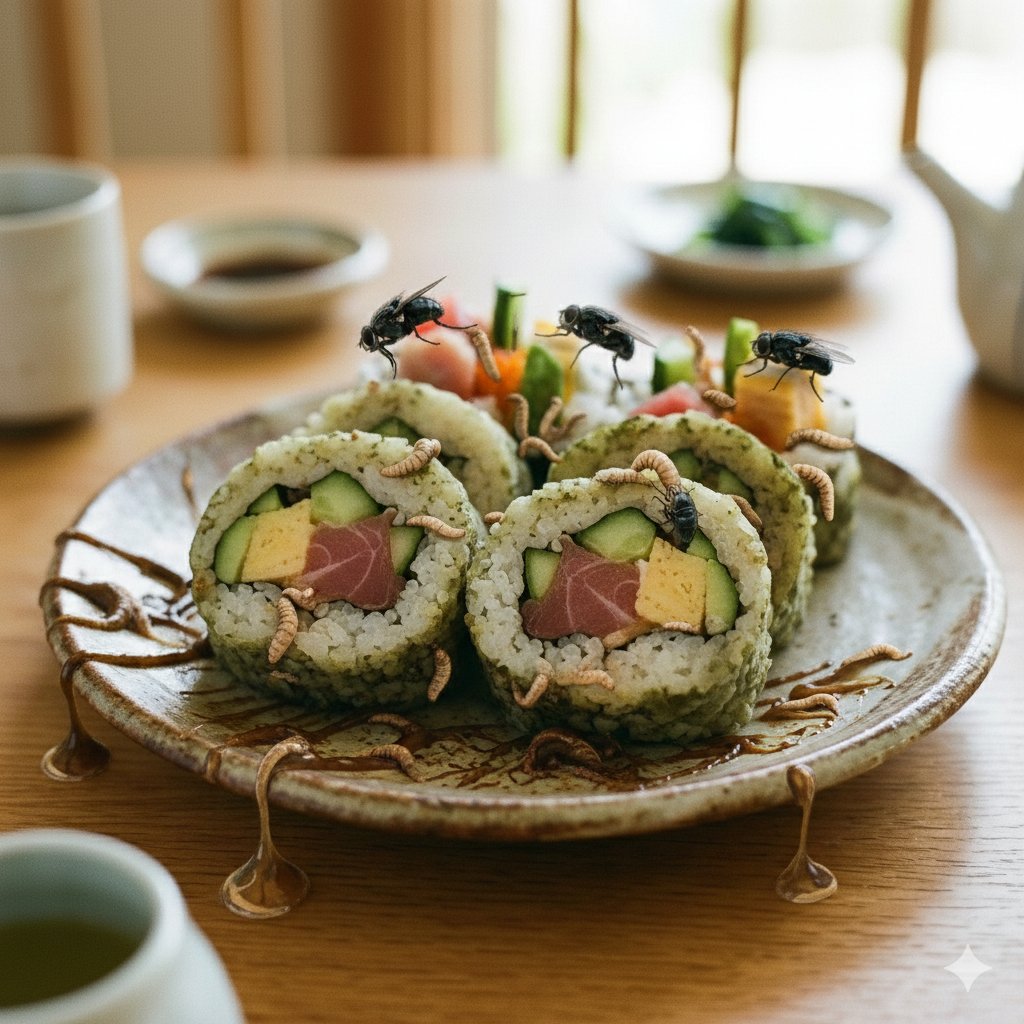
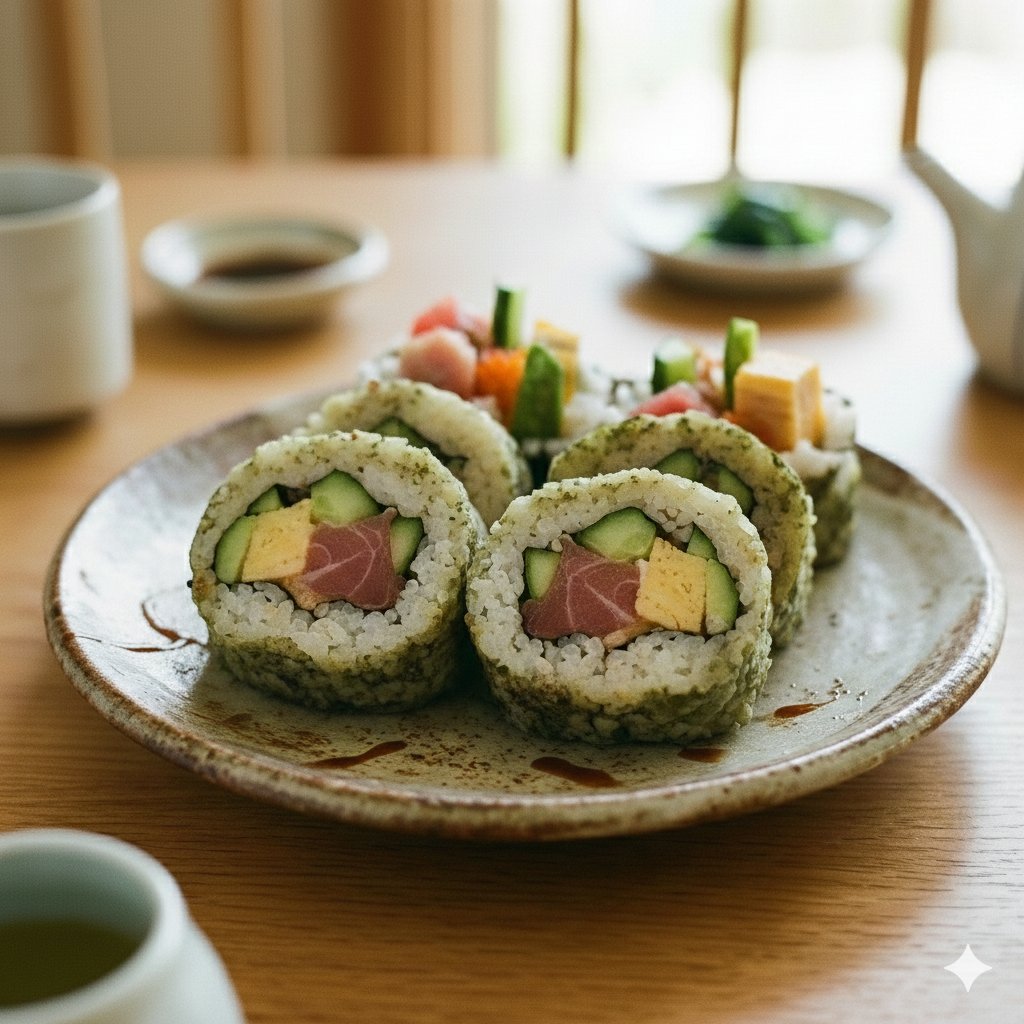
You post a photo of it on Instagram. It looks colorful, fresh, and undeniably artisanal. The Futomaki—that cylindrical giant of the sushi world—is often paraded as the pinnacle of a balanced, 'treat yourself' meal. But let’s drop the aesthetic pretense and look at the cold, hard biochemistry on your plate. What you are actually consuming is a metabolic grenade wrapped in seaweed. 🧪 A standard Futomaki roll is not merely 'sushi'; it is a compressed carbohydrate bomb. A typical cut contains anywhere from 300 to 400 grams of white rice. Do not mistake this for steamed rice; this is shari—rice that has been chemically altered with a mixture of vinegar, salt, and significant amounts of sugar to achieve that addictive stickiness and sheen. When you consume a full roll, you are ingesting upwards of 80 to 100 grams of refined carbohydrates in a single sitting. This triggers a violent postprandial glycemic excursion, spiking your blood glucose levels rapidly. For a healthy adult, the glycemic load of white rice is already high (around 73 on the GI scale), but when you compress three bowls worth of it into a dense roll, you are forcing your pancreas to flood your system with insulin. This is not nutrition; this is the architectural blueprint for insulin resistance.
Let’s dissect the fillings, which serve as the Trojan horse for processed ingredients. You believe you are eating fresh fish and vegetables? Look closer. The 'Tamago' (Japanese omelet) occupying a large sector of the roll is less egg and more sponge cake. It is traditionally prepared with generous amounts of sugar and mirin to create that sweet, custard-like texture. A single slice can contain 5-8 grams of added sugar. Then consider the 'Kanpyo' (dried gourd strips) and 'Oboro' (pink fish flakes). These are not fresh ingredients; they are preserved items simmered for hours in soy sauce and sugar until they are essentially candied. If your roll contains 'Unagi' (eel), you are ingesting a protein glazed in 'tare' sauce—a viscous reduction of soy sauce and caramelized sugar. When you tally the sucrose and fructose content hidden within the vinegar rice, the omelet, the gourd, and the eel glaze, a single Futomaki roll can easily surpass the sugar content of a standard chocolate bar. You are eating dessert disguised as dinner. Furthermore, the inclusion of 'shrimp tempura' inside the roll introduces oxidized lipids. This batter is deep-fried in industrial seed oils (often soybean or canola), which are high in inflammatory Omega-6 fatty acids. The high-heat processing of the starch in the batter creates acrylamide, a known carcinogen, and the oil itself undergoes lipid peroxidation, introducing free radicals into your system that damage cellular membranes.
We must also address the sodium content, which is frankly astronomical. A single Futomaki roll, before you even dip it in soy sauce, is a sodium minefield due to the seasoning of the rice, the curing of the pickles, and the marination of the fillings. We are looking at a baseline of 1,200 to 1,500 mg of sodium—more than half of your recommended daily allowance—in one menu item. If you make the mistake of dipping these large pieces into soy sauce to mask the dryness of the compressed rice, you are easily exceeding 2,500 mg of sodium in one meal. This leads to immediate water retention, bloating, and elevated blood pressure (hypertension). For the vascular system, this meal is a stress test. Moreover, the sheer caloric density is deceptive. Because the ingredients are tightly rolled and compressed, your visual satiety cues are tricked. You think you are eating a modest volume, but the caloric payload is dense. A premium Futomaki with fatty tuna (Otoro), eel, and tempura can range from 800 to 1,200 calories per roll. 📉 For a sedentary office worker in their 30s, this single roll constitutes nearly 60-70% of their total daily energy expenditure, yet it provides almost no fiber to slow the absorption of the massive sugar and carb load.
Finally, we cannot ignore the carcinogen risks associated with modern aquaculture and ingredient processing found in these rolls. If your roll utilizes farmed salmon or mass-market tuna, you are potentially exposing yourself to bioaccumulated heavy metals like mercury and polychlorinated biphenyls (PCBs). The 'pink' color of the Oboro or the bright yellow of the pickled daikon often comes from synthetic food dyes (like Yellow 5 or Red 40) in cheaper establishments, which have been linked to hypersensitivity and potential carcinogenicity in animal studies. The Futomaki is a culinary illusion. It uses the halo effect of 'Japanese cuisine' to sell you a hyper-processed, high-sugar, high-sodium, calorie-dense brick. It lacks the fiber to be metabolically safe and the ingredient purity to be considered 'clean eating.' If you value your endothelial function and insulin sensitivity, view this not as a meal, but as an inflammatory event.
📌 Truth Summary
- Glycemic Disaster: The compressed, sugared sushi rice delivers 100g+ of refined carbs, causing a massive insulin spike similar to eating cake.
- Hidden Sugars: Ingredients like Tamago, Kanpyo, and Eel are cooked in sugar and mirin, turning the savory roll into a hidden dessert.
- Inflammatory Fats: Tempura fillings introduce oxidized industrial seed oils and acrylamides (carcinogens) from deep-frying.
- Sodium Overload: A single roll can contain over 1,500mg of sodium before dipping sauce, stressing the cardiovascular system and causing retention.