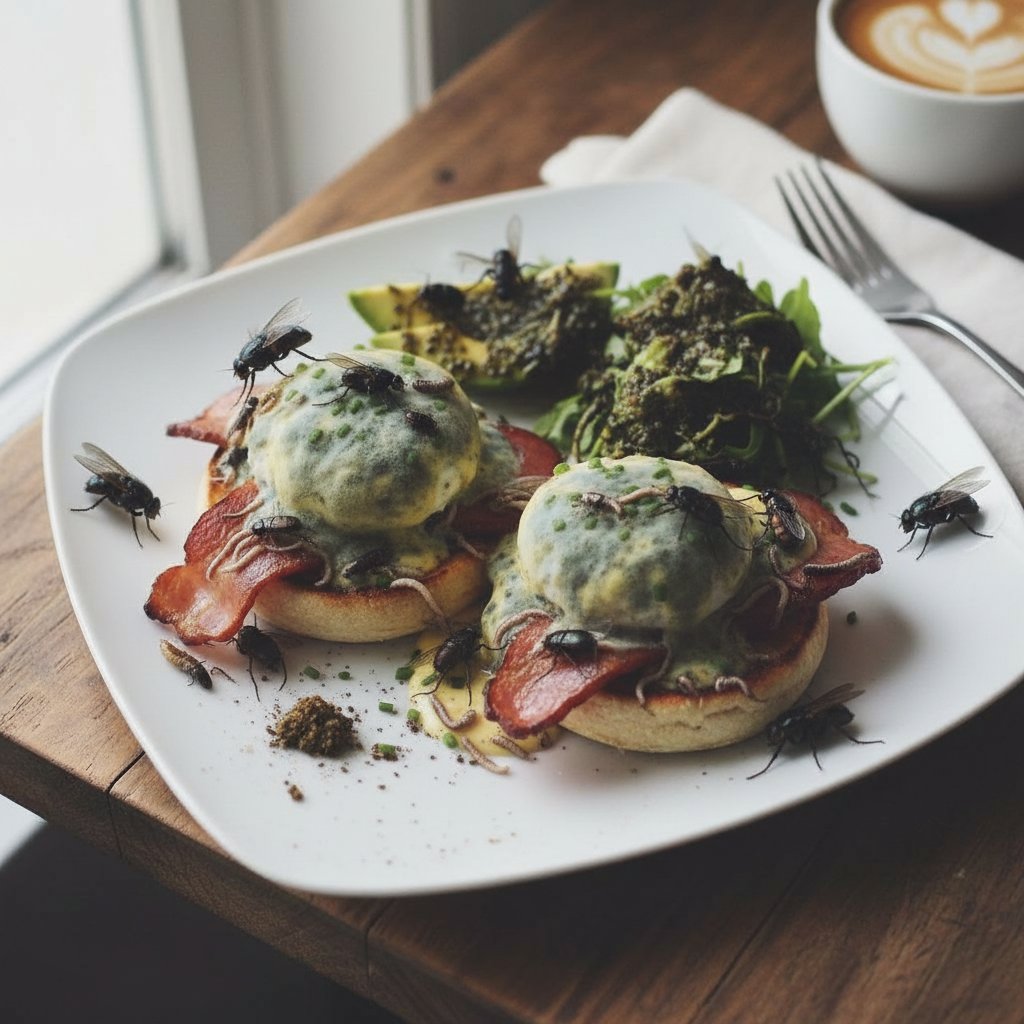

If there is one dish that perfectly encapsulates the nutritional bankruptcy of modern brunch culture, it is Eggs Benedict. You view it as a sophisticated weekend treat; I view it as a calculated assault on your cardiovascular system. Let’s dispense with the romanticized notion of poached eggs and 'velvety' sauce and look at the cold, hard data. A standard restaurant serving of Eggs Benedict—comprising two English muffin halves, two poached eggs, Canadian bacon, and a generous ladle of Hollandaise—frequently exceeds 1,000 calories. For a sedentary adult female, that is nearly 60% of the entire daily caloric requirement consumed in a single sitting, often before noon. This isn't 'fuel'; it is a metabolic burden. The primary offender is, of course, the Hollandaise. To the culinary layman, it is a sauce; to a biochemist, it is a lipid emulsion designed to maximize caloric density. It is essentially pure butterfat suspended in egg yolk. A typical serving coats your plate with over 60 grams of total fat, with a staggering 25 to 30 grams of that being saturated fat. To put this into perspective, the American Heart Association recommends capping saturated fat intake at 13 grams per day. With one order of Eggs Benedict, you are double-dosing your arteries with a type of fat known to raise LDL (low-density lipoprotein) cholesterol, directly contributing to the formation of atherosclerotic plaque. You are essentially paying $18 to harden your arteries. 🧈
Beyond the lipid toxicity of the sauce, we must address the sodium content, which is nothing short of hypertensive malpractice. Between the English muffin (which is surprisingly salty), the salted butter in the sauce, and the cured meat, a single plate can easily contain over 2,200 milligrams of sodium. That is practically 100% of the recommended daily limit for a healthy adult, and dangerously high for anyone with existing blood pressure issues. The 'Canadian bacon' or ham slice is not merely a source of protein; it is a processed meat product. As classified by the World Health Organization's International Agency for Research on Cancer (IARC), processed meats are Group 1 carcinogens. They contain nitrates and nitrites used for curing and color preservation. When these nitrates are exposed to high heat or the acidic environment of the stomach, they can convert into nitrosamines, compounds that have been statistically linked to an increased risk of colorectal cancer. You are not just eating ham; you are consuming a chemically treated substrate that has a scientifically proven correlation with cellular mutation. Even if you swap the ham for smoked salmon (Eggs Royale), you are barely mitigating the sodium disaster, though you trade the nitrates for a slightly better omega-3 profile—a negligible victory in a sea of butterfat.
We must also dissect the foundation of this dish: the refined carbohydrate vehicle known as the English muffin. It provides zero nutritional redemption. Made from bleached white flour, it is devoid of fiber and essential micronutrients. When you consume this simple starch, it converts rapidly to glucose, causing a sharp spike in blood sugar. However, the metabolic insult is compounded by the presence of the massive fat load from the Hollandaise. This is the worst possible macronutrient combination: high refined carbs mixed with high saturated fat. The insulin spike triggered by the muffin opens the cellular 'doors' for energy storage, while the flood of dietary fat provides the payload to be stored. This state of 'postprandial lipemia' (fat in the blood) can impair endothelial function—the ability of your blood vessels to dilate—for hours after the meal. 📉 While you sit there feeling the lethargy of a 'food coma,' your body is struggling to clear triglycerides from your bloodstream, resulting in systemic inflammation. This is not relaxation; it is a physiological distress signal.
In conclusion, Eggs Benedict is a masterclass in inefficiency and health risks. It offers a trifecta of modern dietary poisons: excessive saturated fats, astronomical sodium levels, and carcinogenic processed meats, all served on a bed of high-glycemic refined carbohydrates. The nutrient density relative to the caloric load is abysmal. You are consuming the caloric equivalent of a heavy dinner for breakfast, with none of the fiber or phytonutrients required to process it. If you value your endothelial lining and wish to avoid the cumulative damage of oxidative stress, this dish should be categorized not as a 'brunch staple,' but as a biohazard. If you absolutely must dine out, order poached eggs on a bed of steamed spinach with the sauce on the side—or better yet, leave the sauce in the kitchen where it belongs. Do not let the aesthetic appeal of a runny yolk blind you to the biological reality on your plate.
📌 Truth Summary
- Lipid Toxicity: Contains over double the daily recommended limit of saturated fat due to the butter-heavy emulsion of Hollandaise sauce.
- Sodium Overload: A single serving provides nearly 2,200mg of sodium, instantly maximizing your daily allowance and spiking blood pressure.
- Carcinogenic Risks: The cured Canadian bacon contains nitrates and nitrites, classified as Group 1 carcinogens linked to colorectal cancer.
- Metabolic insult: The combination of refined carbohydrates (muffin) and high fat creates a 'glucolipotoxic' environment that promotes rapid fat storage and inflammation.