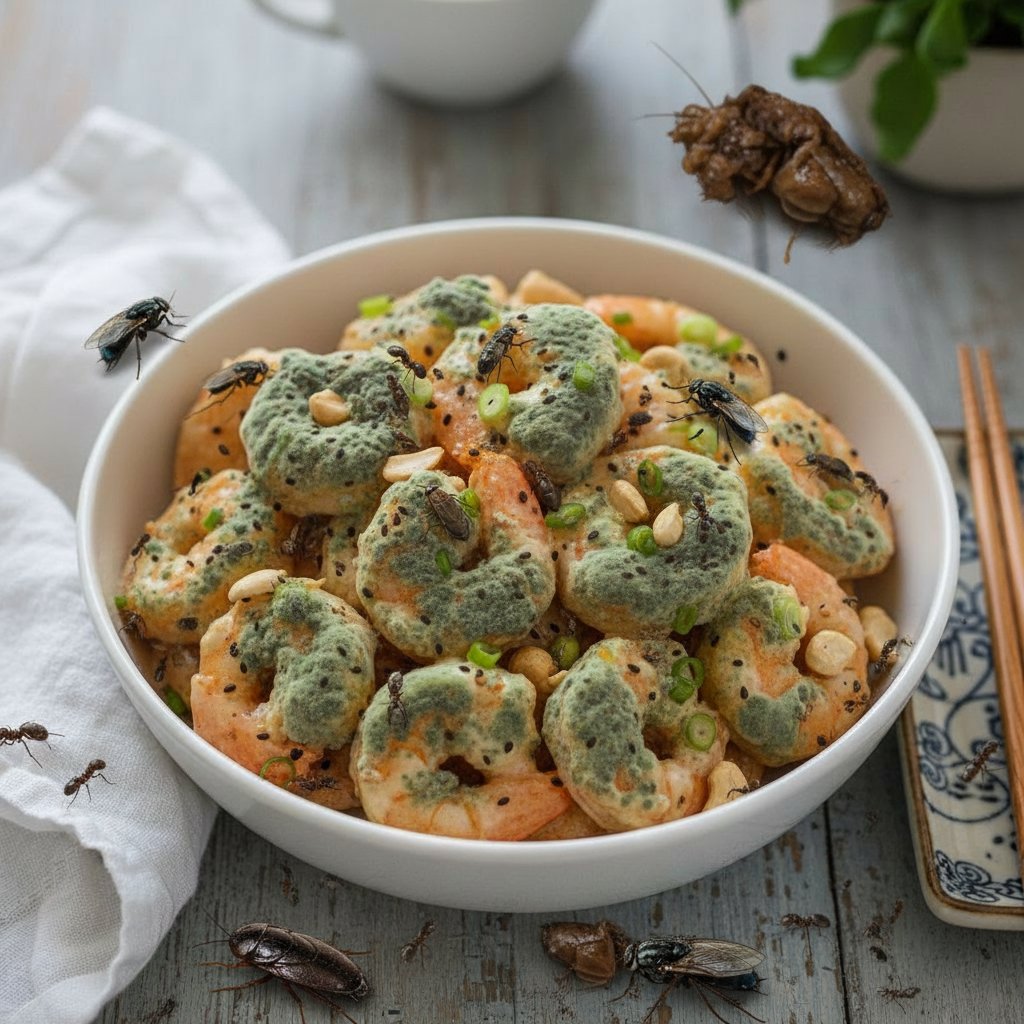
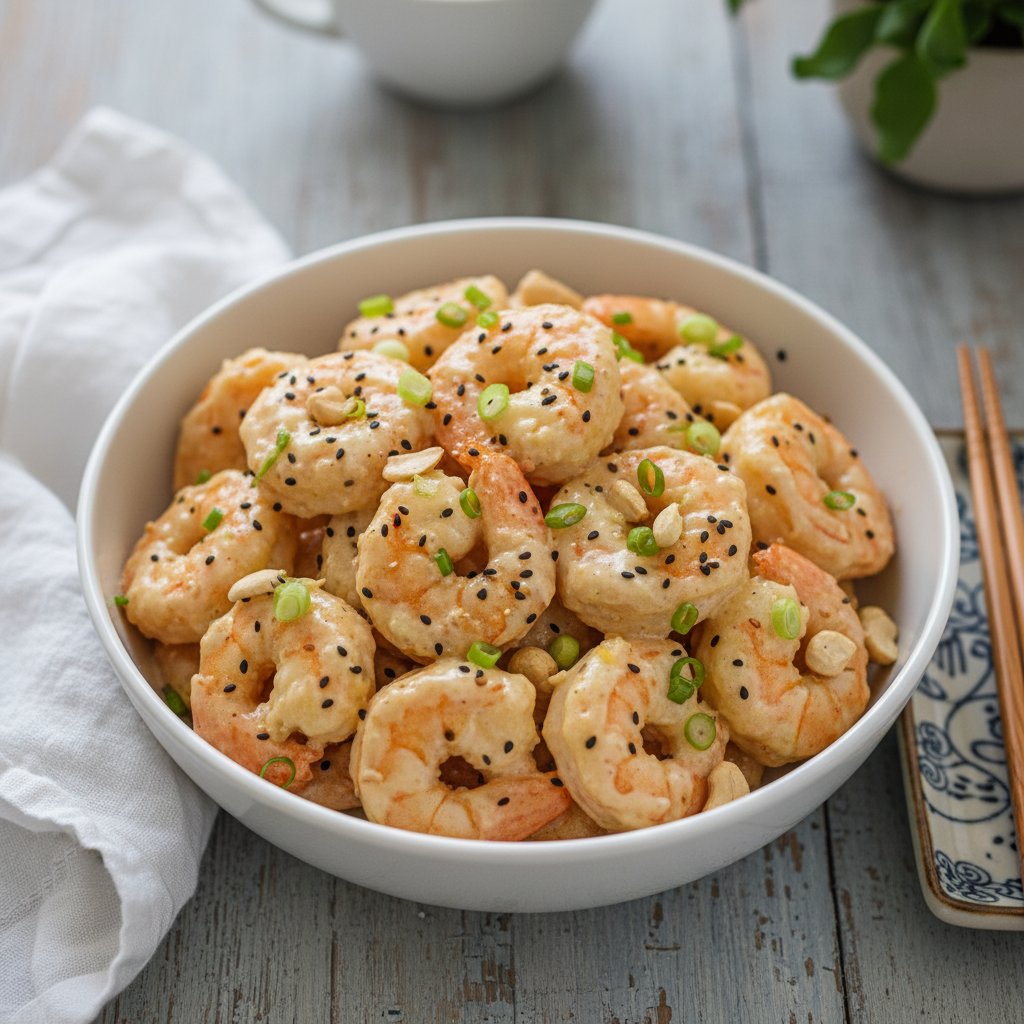
Let us dispense with the culinary romanticism surrounding 'Cream Shrimp' (크림 새우). In the landscape of Korean-Chinese fusion cuisine, this dish represents a masterclass in nutritional destruction. You are taking a pristine, low-calorie protein source—the shrimp—and subjecting it to a dual-phase process of degradation involving deep-frying and heavy sugar-fat coating. To the uneducated palate, the combination of crispy texture and sweet, creamy sauce hits the 'bliss point,' a scientifically engineered ratio of sugar, fat, and salt that overrides the brain's satiety signals. However, from a physiological standpoint, consuming a standard plate of Cream Shrimp is akin to ingesting a metabolic bomb. A typical restaurant serving (approximately 250-300g) does not merely provide sustenance; it delivers upwards of 900 to 1,100 calories. To put this into perspective, you are consuming nearly 60% of a standard adult's daily caloric requirement in a single appetizer. The base ingredient, shrimp, is inherently healthy, offering lean protein and iodine. Yet, once encased in a thick batter of refined starch and submerged in oxidized oil, the protein content becomes irrelevant compared to the massive load of inflammatory inputs you are introducing to your system. 📉
The first vector of health deterioration in this dish is the frying process. To achieve that signature crunch, the shrimp is coated in a heavy batter usually made from cornstarch or potato starch—pure, refined carbohydrates with a high glycemic index. When this batter hits oil heated to 180°C (356°F), it undergoes the Maillard reaction, which looks appetizing but signifies the formation of Advanced Glycation End-products (AGEs). Furthermore, restaurants rarely change frying oil after every batch. This means the shrimp are bathing in oil that has undergone hydrolysis, oxidation, and polymerization. You are essentially eating a sponge soaked in lipid peroxides and aldehydes, compounds directly linked to cellular damage and systemic inflammation. The batter acts as a delivery system for these toxins, increasing the surface area to absorb as much oil as possible. While a raw shrimp is roughly 1% fat, a batter-fried shrimp in this dish can be composed of 40-50% fat by weight. Most of this fat comes from cheap vegetable oils (soybean or corn) high in Omega-6 fatty acids, further throwing off your Omega-3 to Omega-6 ratio and promoting a pro-inflammatory state in the body. 🧪
If the deep-frying were the only issue, this would simply be a standard 'junk food' review. However, Cream Shrimp distinguishes itself with its sauce. Do not be fooled by the word 'cream.' In the vast majority of commercial kitchens, no actual dairy cream is used. The sauce is a crude emulsion of industrial mayonnaise, condensed milk (or heavy syrup), lemon juice, and sugar. This creates the most metabolically dangerous macronutrient profile known to nutritional science: High Fat + High Sugar. When you consume fat alone, insulin response is blunted. When you consume sugar alone, insulin spikes. When you consume them together—as you do in this sauce—you create a 'supra-additive' effect. The sugar spikes your insulin, opening the doors to your fat cells, and the massive amount of dietary fat from the mayonnaise is immediately shuttled into storage. A modest 100g of this sauce can contain 40g of fat and 20g of sugar. You are voluntarily stressing your pancreatic beta cells while flooding your bloodstream with triglycerides. The inclusion of lemon or yogurt flavors is merely a masking agent, an acid component designed to cut the greasiness so you can consume more of the product without feeling the immediate physiological rejection usually associated with eating pure fat.
Ultimately, eating Cream Shrimp is an exercise in vascular and metabolic self-sabotage. Immediately post-ingestion, the massive influx of sodium (often exceeding 1,200mg due to the batter seasoning and sauce stabilizers) causes water retention and blood pressure elevation. Simultaneously, the post-prandial lipemia (fat in the blood) can impair endothelial function—the ability of your blood vessels to dilate—for hours after the meal. You will likely experience a 'food coma,' which is not a sign of satisfaction, but a symptom of your body diverting massive resources to process a difficult, nutrient-poor, energy-dense bolus. As a health-conscious individual in my 30s, looking at the data makes the decision simple. The fleeting pleasure of the 'crispy-creamy' texture is not worth the systemic inflammation, the insulin resistance risk, and the oxidative stress placed on your liver. If you crave shrimp, eat it steamed or grilled. If you eat this, understand that you are not fueling your body; you are burdening it. 🍤
📌 Truth Summary
- The Fat-Sugar Trap: The combination of fried batter and sweet mayo sauce creates a 'supra-additive' insulin response, forcing rapid fat storage and metabolic stress.
- Oxidative Toxicity: The porous batter absorbs reused, high-heat vegetable oils containing aldehydes and lipid peroxides, promoting cellular inflammation.
- Caloric Density: A single serving can exceed 1,000 calories with negligible micronutrient density, turning a lean protein source into an obesity risk factor.
- Sodium Overload: Hidden salts in the batter and sauce stabilizers often push sodium content over 50% of the daily recommended limit, risking vascular constriction.