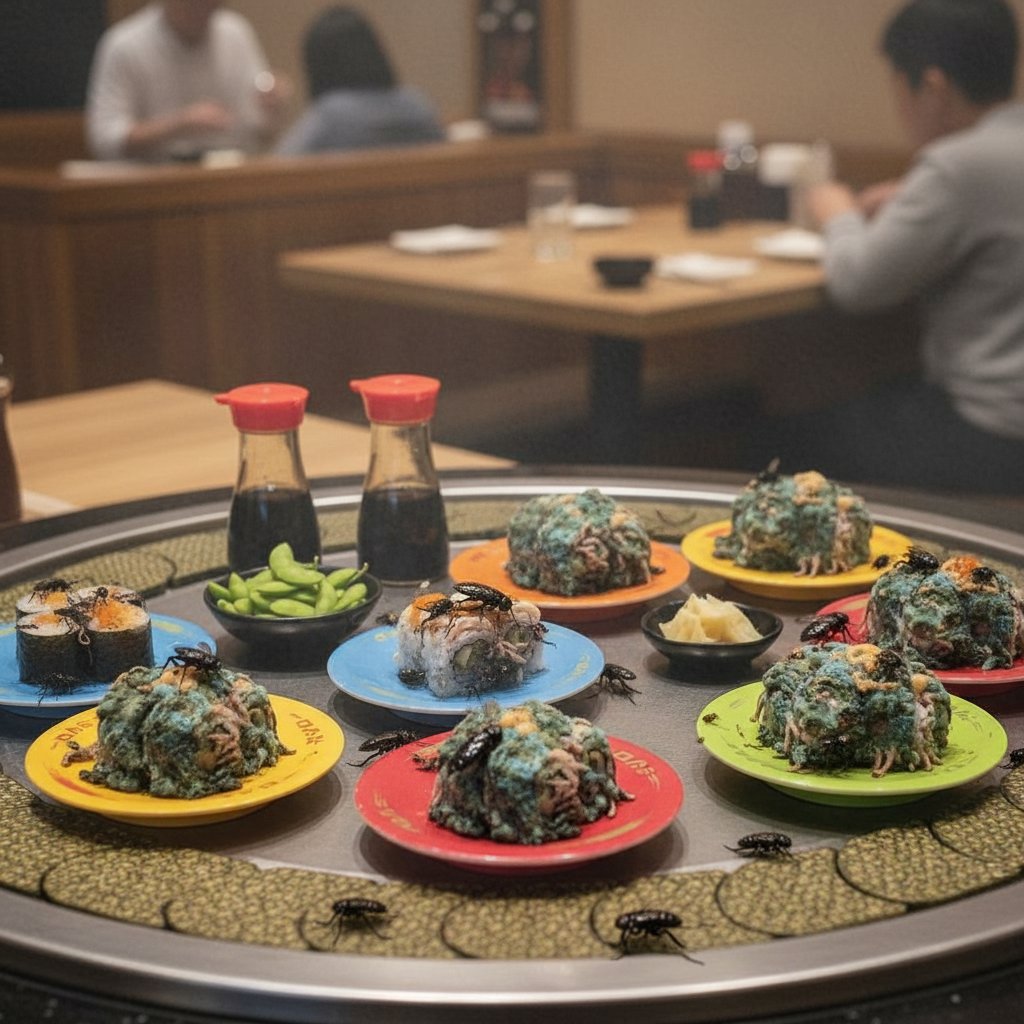
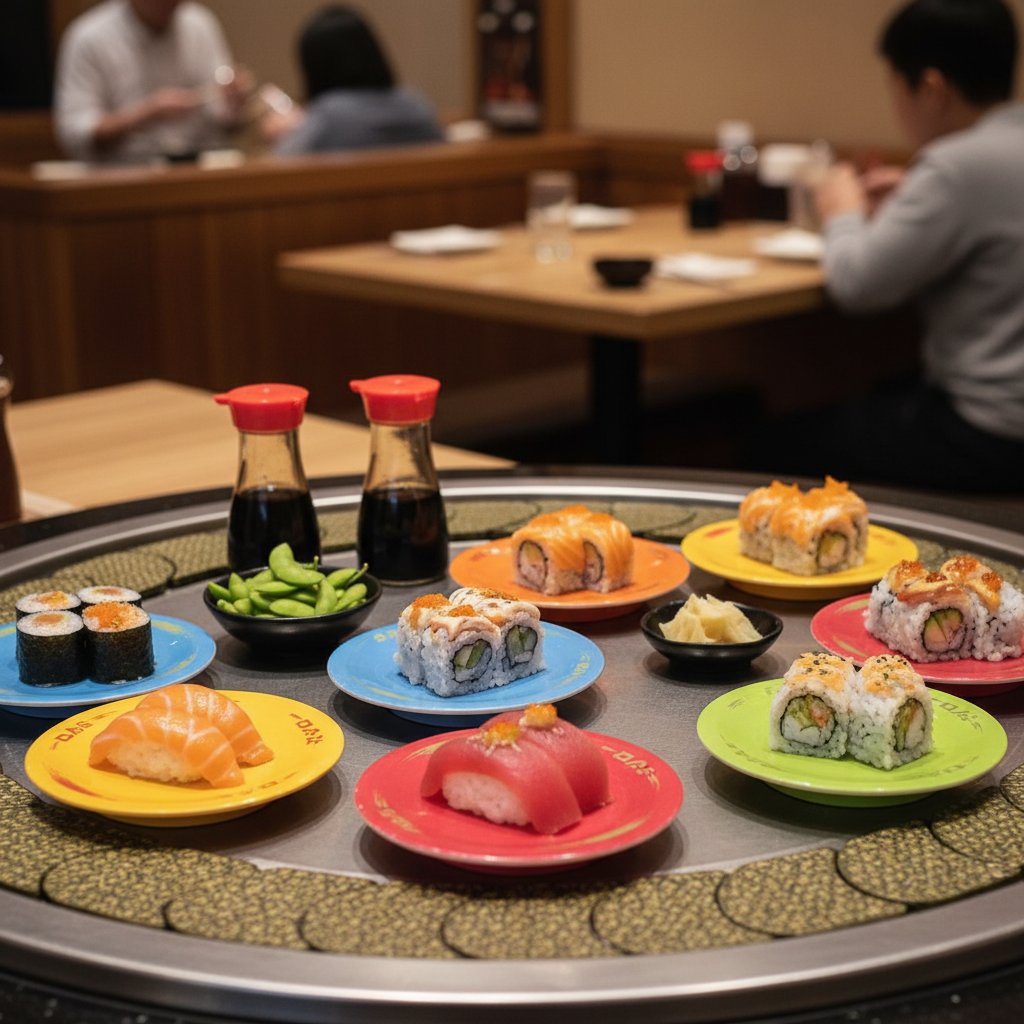
There is a hypnotic quality to the endless loop of colorful plates drifting past your booth, a mechanism designed to bypass your prefrontal cortex and tap directly into impulse-driven gluttony. You likely perceive conveyor belt sushi, or kaiten-zushi, as a 'light' or 'fresh' option—a permissible indulgence in a landscape of fried fast food. This is a dangerous misconception. From an analytical standpoint, this dining model is essentially an assembly line of refined carbohydrates, heavy metals, and bacterial risks masquerading as health food. Let us begin with the foundation: the rice (shari). You are not eating steamed grain; you are consuming a high-glycemic delivery vehicle for sugar. To achieve that signature stickiness and sheen, sushi rice is treated with a seasoning mixture that typically follows a ratio necessitating significant amounts of sugar and salt. A standard cup of prepared sushi rice can contain upwards of a tablespoon of sugar and nearly 500mg of sodium before a single drop of soy sauce is added. Short-grain white rice alone possesses a Glycemic Index (GI) hovering around 75-80, causing rapid spikes in blood glucose and insulin. When you consume plate after plate, you are essentially front-loading your metabolic system with a refined starch bomb that promotes visceral fat storage, all while the distinct lack of fiber fails to provide satiety, encouraging you to reach for yet another passing plate.
We must then scrutinize the protein sitting atop these sugar-laden starch pillows. In the context of budget-friendly conveyor belt establishments, you are rarely receiving premium, wild-caught cuts. Instead, you are fed a parade of farmed fish and highly processed imitations. Take the ubiquitous 'crab stick' or *surimi*. It is a masterpiece of industrial chemistry—pulverized white fish paste (often pollock) bound with starch, sugar, sorbitol, artificial flavors, and red food dye (typically Carmine or Red #40). It provides almost zero nutritional value while spiking your intake of additives. Furthermore, the popular farmed salmon found on these belts typically contains far higher levels of polychlorinated biphenyls (PCBs) and inflammatory Omega-6 fatty acids compared to their wild counterparts due to the soy and corn-based feed used in aquaculture. Of greater concern is the tuna. The bioaccumulation of methylmercury in larger predatory fish is a documented neurotoxic risk. A study analyzing sushi tuna samples found mercury concentrations often exceeding 0.3 ppm, the EPA's safety threshold. When you mindlessly consume four or five plates of tuna nigiri in one sitting, you are likely exceeding your safe weekly limit of mercury intake in under twenty minutes. This is not nutrition; it is a heavy metal accumulation event.
Beyond the macronutrient profile, the very mechanics of the conveyor belt present a distinct microbiological nightmare 📉. Food safety regulations dictate that raw fish must be kept below 41°F (5°C) to inhibit bacterial growth. However, once that plate enters the rotation, it enters the 'Danger Zone' (40°F - 140°F). While many modern systems use RFID chips to discard plates after a set time, older or less scrupulous establishments may allow plates to circulate for over an hour. During this time, the fish warms to room temperature, becoming a petri dish for pathogens such as Vibrio parahaemolyticus, Salmonella, and Staphylococcus aureus. Furthermore, the open-air nature of the belt exposes your food to the aerosolized respiratory droplets of every customer seated upstream from you. Every cough, sneeze, or laugh directs particulate matter onto the unprotected slices of raw protein slowly drifting toward your mouth. The sheer statistical probability of consuming compromised food increases with every revolution of the belt. It is a game of bacteriological roulette that no health-conscious individual should be willing to play.
Finally, we must address the cumulative toxicity of the sauces and condiments that define the modern conveyor belt experience. The 'spicy mayo' drizzled liberally over rolls is predominantly soybean oil—a pro-inflammatory seed oil high in linoleic acid—mixed with high-fructose corn syrup-laden chili paste. Then there is the sodium factor. A single tablespoon of soy sauce contains roughly 900mg to 1000mg of sodium, nearly half of the recommended daily limit. Most diners consume significantly more, dipping rice-heavy rolls that act as sponges, absorbing excessive saline fluid. When you combine the sodium in the rice seasoning, the processed surimi, the miso soup (another 800mg+), and the soy sauce, a single meal can easily surpass 3,000mg of sodium. This induces acute water retention, increases blood pressure, and places unnecessary strain on renal function. The gamification of the experience—stacking plates to track your consumption—psychologically incentivizes overeating, turning a meal into a high-score chase where the only prize is metabolic dysfunction. Stop viewing this as a fun night out; view it as a systemic assault on your physiology.
📌 Truth Summary
- Glycemic Disaster: 'Sushi rice' is a high-GI refined carb heavily seasoned with sugar and salt, causing massive insulin spikes comparable to dessert.
- Heavy Metal Toxicity: Cheap tuna cuts often exceed EPA safety limits for methylmercury, and farmed salmon is laden with PCBs and inflammatory Omega-6s.
- Hygiene Failure: The 'Danger Zone' temperature abuse and open-air exposure to other diners' respiratory droplets create an ideal breeding ground for Vibrio and Staphylococcus.
- Chemical Fillers: Popular items like 'crab stick' (surimi) are highly processed industrial pastes containing sorbitol, artificial dyes, and starches, devoid of real nutritional value.