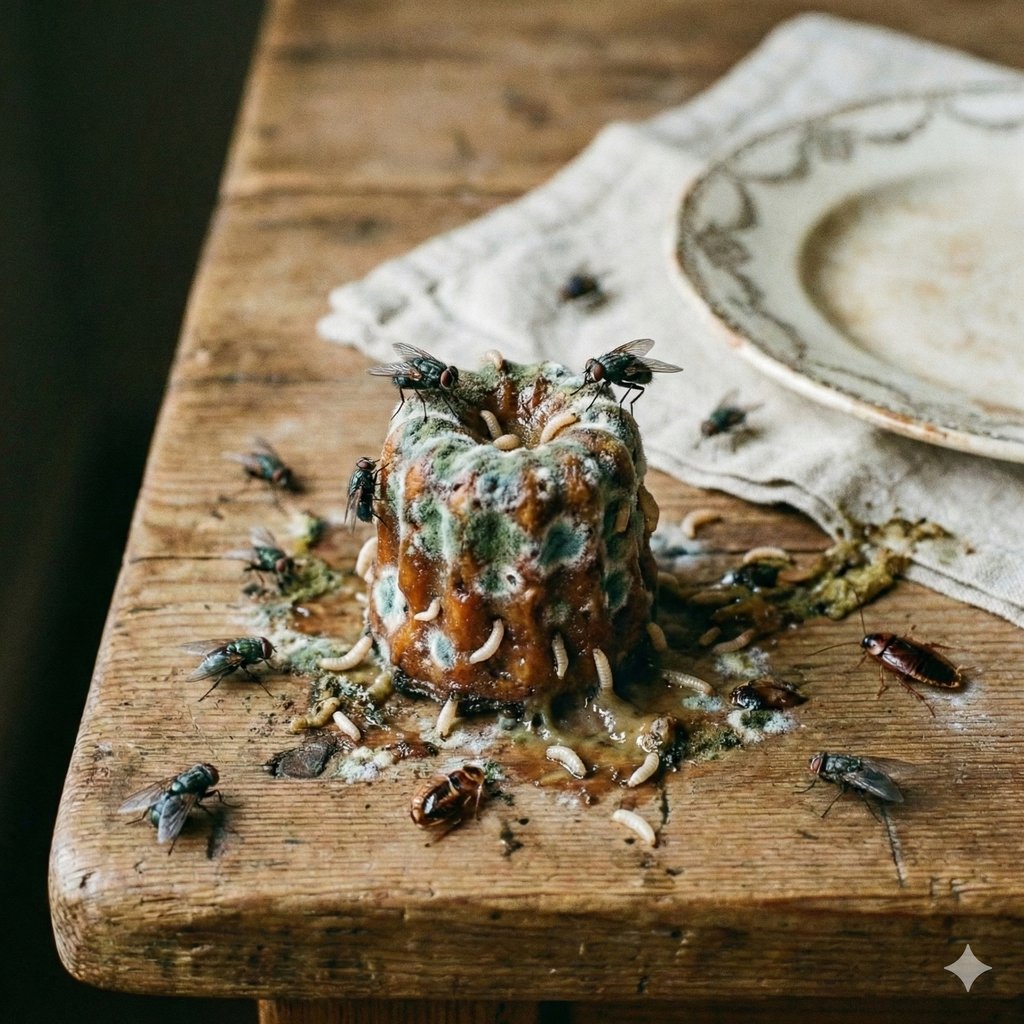

If there is one pastry that perfectly encapsulates the modern consumer’s willingness to prioritize aesthetics over biological integrity, it is the Canelé de Bordeaux. Social media feeds are inundated with close-ups of its dark, caramelized crust and custardy interior, usually accompanied by poetic captions about 'texture contrast.' As a health analyst, I see something entirely different: a compressed cylinder of metabolic chaos. Let us strip away the romanticized French narrative and look at the data. A standard canelé weighs approximately 60 grams yet packs a staggering 170 to 200 calories. This caloric density—roughly 3.3 calories per gram—is achieved through a batter that is essentially a hyper-saturated suspension of sucrose and lipids. The ingredient list is primitive and terrifyingly devoid of fiber: white flour, excessive egg yolks, whole milk, butter, and a volume of sugar that often exceeds the weight of the flour. When you consume a canelé, you are not eating food; you are injecting a rapid-release glucose bomb directly into your bloodstream. With an estimated Glycemic Index (GI) hovering above 75, the immediate physiological response is a violent spike in blood glucose, forcing your pancreas to flood your system with insulin. This cycle, repeated often enough by 'treat culture,' is the foundational mechanism of insulin resistance and Type 2 diabetes. 📉
The signature feature of the canelé—that dark, thick, crunchy crust—is often cited by gourmands as its greatest virtue. Scientifically, however, it represents a significant health hazard. That crust is the result of the Maillard reaction taken to its extreme limit, often bordering on pyrolysis (burning). To achieve that specific color and texture, the batter is baked at aggressive temperatures, often starting at 250°C (482°F) or higher in conductive copper molds. When starchy, sugary foods are subjected to temperatures above 120°C, a chemical reaction occurs between amino acids and reducing sugars to form acrylamide. Acrylamide is classified by the International Agency for Research on Cancer (IARC) as a Group 2A carcinogen, meaning it is 'probably carcinogenic to humans.' While regulatory agencies fight over acceptable limits in potato chips, the artisanal pastry market largely ignores the issue. The darker the canelé, the higher the concentration of Advanced Glycation End-products (AGEs). AGEs are oxidative compounds that bind to your cells, promoting inflammation, damaging collagen (accelerating skin aging), and contributing to the hardening of arteries. You are essentially paying a premium to ingest oxidative stress. 🧪
Beyond the sugar and the carcinogens, we must address the lipid profile. The interior custard owes its texture to a high concentration of saturated fats derived from butter and egg yolks. While dietary fats are essential, the specific matrix of the canelé is problematic. It combines high saturated fat with high refined carbohydrates. This combination triggers the 'Randle Cycle,' a metabolic process where the presence of high fatty acids inhibits glucose oxidation, and high glucose inhibits fatty acid oxidation. In layman’s terms: your body becomes metabolically deadlocked. It cannot efficiently burn the sugar because of the fat, and it cannot burn the fat because of the sugar. The result? The energy is shunted almost exclusively into adipose tissue storage, specifically targeting visceral fat around the organs. Furthermore, the use of rum in the batter—while the alcohol largely evaporates—leaves behind residual sugars and contributes to the overall caloric load without providing satiety. A single canelé offers less than 2 grams of protein and negligible fiber, meaning it has a satiety score of near zero. You will be hungry again in 45 minutes, once the sugar crash hits.
Ultimately, the canelé is a triumph of chemistry over biology, designed to exploit our evolutionary craving for high-energy density while offering zero nutritional return. It is a 'nutrient-poor, energy-dense' food in the strictest clinical definition. There are no antioxidants, no essential minerals in meaningful quantities, and no complex carbohydrates to moderate digestion. It is simply a vehicle for delivering maximum caloric load in a minimum surface area, coated in a carcinogenic shell for 'crunch.' To consume one is to subject your body to a multi-front assault: hormonal disruption from the sugar, cellular damage from the acrylamide, and metabolic confusion from the fat-sugar matrix. It is a sophisticated poison, wrapped in beeswax and tradition. Do not let the price tag or the French name fool you into thinking this is a high-quality food source. It is merely high-quality marketing for biological degradation.
📌 Truth Summary
- Item1: Glycemic Violence: Contains ~15g of refined sugar per small piece, causing immediate blood glucose spikes and insulin strain.
- Item2: Acrylamide Formation: The signature dark crust is a result of extreme high-heat Maillard reactions, creating Group 2A carcinogenic compounds.
- Item3: The Randle Cycle Effect: The combination of high saturated fat and refined sugar inhibits the body's ability to burn either fuel source efficiently, promoting rapid fat storage.
- Item4: Nutritional Void: Provides ~200 calories with negligible fiber or protein, resulting in a zero satiety score and inevitable hunger crashes.