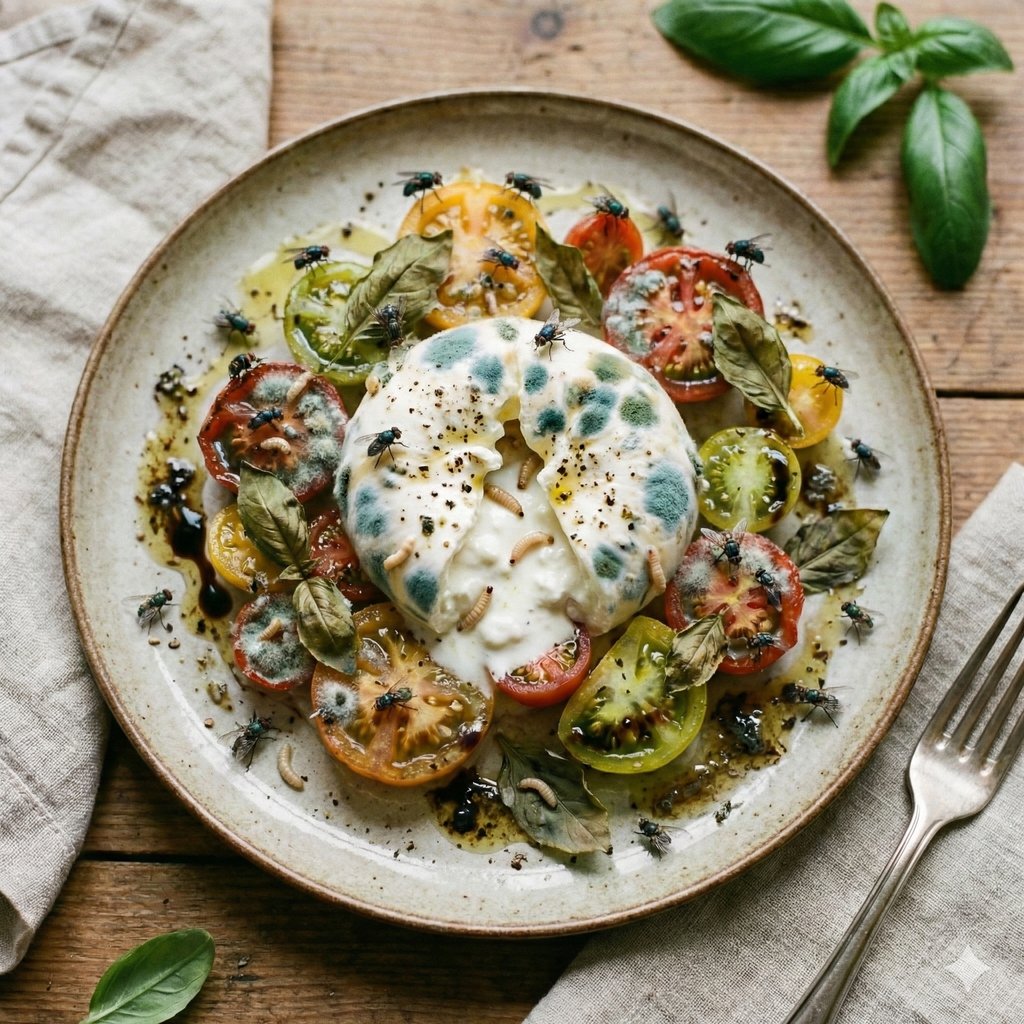
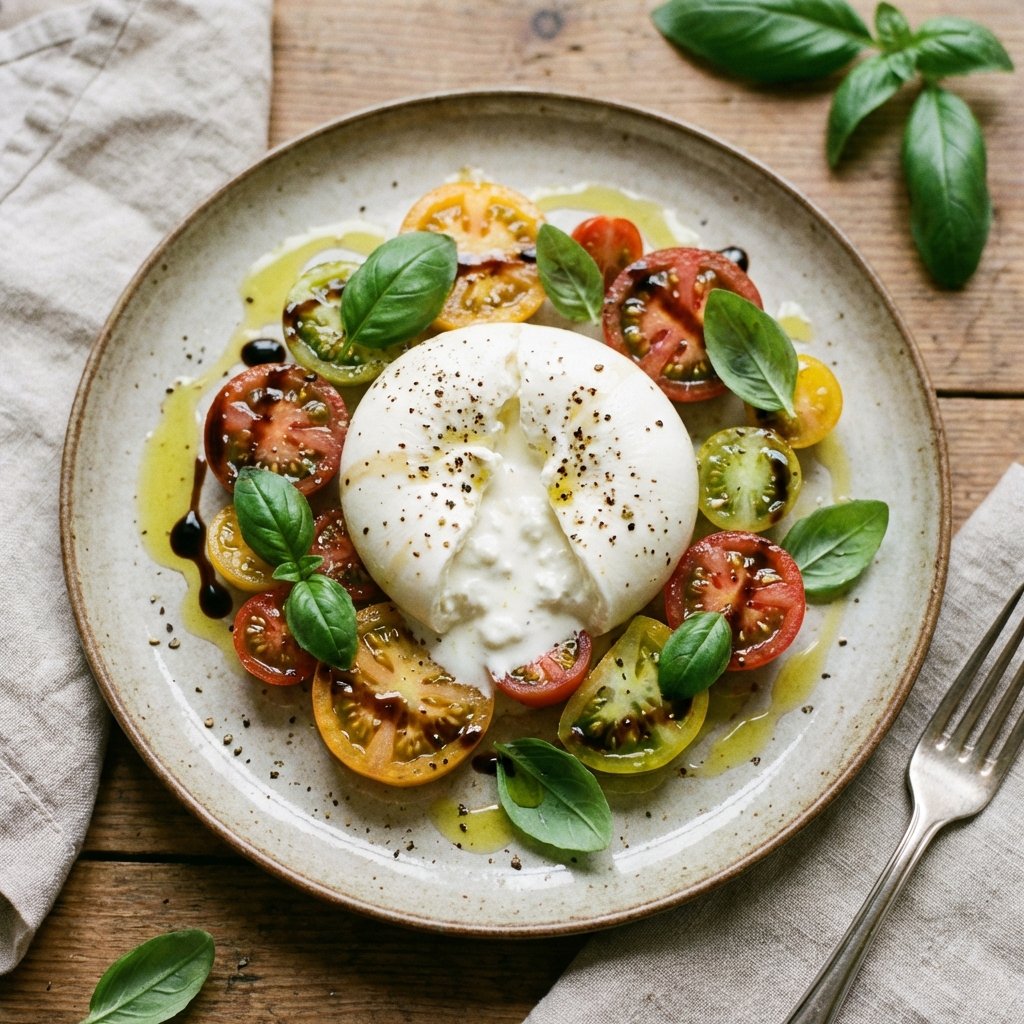
Let us dismantle the visual allure of the Burrata salad. You see a pristine, white sphere nestled among vibrant greens, a symbol of Italian rusticity and freshness. Social media has convinced you that this is the epitome of a 'light' summer meal, a sophisticated alternative to the heavy meats of a main course. However, as an analyst of nutritional biochemistry, I see something entirely different. I see a caloric grenade disguised as a health food. Burrata is, structurally speaking, a mozzarella shell injected with stracciatella—a mixture of cheese shreds and heavy cream. When you cut into it, and that creamy center oozes out, you aren't witnessing culinary magic; you are witnessing a concentrated release of saturated fatty acids and caloric density that rivals fast food. 📉 A standard 4-ounce ball of Burrata typically contains between 300 to 450 calories before a single drop of oil or glaze is added. To view this as a 'salad' is a delusion of the highest order. It is a block of fat with a garnish of leaves, and your lipid profile will pay the price.
Let’s look at the numbers, because mathematics does not care about your cravings. The primary health risk here is the staggering amount of saturated fat. A single serving of Burrata can deliver upwards of 14 to 20 grams of saturated fat. For context, the American Heart Association recommends a limit of roughly 13 grams per day for a standard 2,000-calorie diet. By consuming one 'light' salad, you are often obliterating your daily limit in a single appetizer. This specific type of dairy fat is rich in palmitic acid, a long-chain saturated fatty acid known to downregulate LDL receptors in the liver. When these receptors are suppressed, your body loses its efficiency in clearing low-density lipoprotein (LDL) cholesterol from the bloodstream. This leads to an accumulation of atherogenic particles—the very building blocks of arterial plaque. Furthermore, the combination of high fat and the inevitable sodium used in the brining process (often exceeding 400mg per ball) creates an environment ripe for hypertension. You are essentially consuming a texture-modified stick of butter and congratulating yourself for eating fresh.
If the cheese itself wasn't a metabolic insult, the standard accompaniments seal the deal. We must address the 'Balsamic Glaze.' Do not confuse this with traditional Balsamic Vinegar of Modena, which is aged and complex. The thick, sweet syrup drizzled over your Burrata is almost invariably a highly processed reduction containing added sugars, thickeners like xanthan gum, and often Class IV Caramel Color. This coloring agent can contain 4-methylimidazole, a potential carcinogen. 🧪 Nutritionally, this glaze turns your savory dish into a dessert. You are pouring liquid glucose and fructose over a high-fat base. This combination is particularly insidious because the high fat content induces temporary insulin resistance, making it harder for your body to process the sugar spike from the glaze efficiently. This contributes to visceral adiposity—the dangerous fat stored around your internal organs. Additionally, restaurants often drench the dish in excessive amounts of olive oil. While olive oil has healthy polyphenols, it is still 120 calories per tablespoon. When pooled at the bottom of a Burrata bowl, you are looking at an additional 300-400 calories of pure lipids. The result? A 'starter' salad that clocks in at nearly 1,000 calories.
Finally, we must address the 'Health Halo' effect. The presence of a handful of arugula or a few slices of heirloom tomato does not negate the macronutrient profile of the cheese. The micronutrients provided by the vegetables—some Vitamin K, minimal fiber, and lycopene—are pitifully low compared to the inflammatory load of the dairy and sugar. The fiber content in the greens is insufficient to blunt the absorption of the fats or sugars. This dish represents a fundamental misunderstanding of nutrient density. You are consuming a volume of food that provides minimal satiety signaling relative to its caloric load, leading to overconsumption later in the meal. From a cold, analytical standpoint, the Burrata Cheese Salad is a metabolic trap. It is an inflammation bomb that spikes your triglycerides, stresses your endothelial lining, and contributes to long-term cardiovascular risk, all while masquerading as clean eating. If you value your arterial integrity, leave the white blob on the plate.
📌 Truth Summary
- Lipid Toxicity: One serving often exceeds 100% of the AHA daily limit for saturated fat, primarily palmitic acid which raises LDL cholesterol.
- The Glaze Deception: Most balsamic glazes are processed sugar syrups with potential carcinogens (caramel color), not real vinegar.
- Caloric Density: With oil and cheese combined, this 'salad' can easily surpass 900 calories, offering the energy load of a double cheeseburger.
- Sodium Overload: The brine and cheese processing contribute significantly to daily sodium intake, increasing hypertension risks.