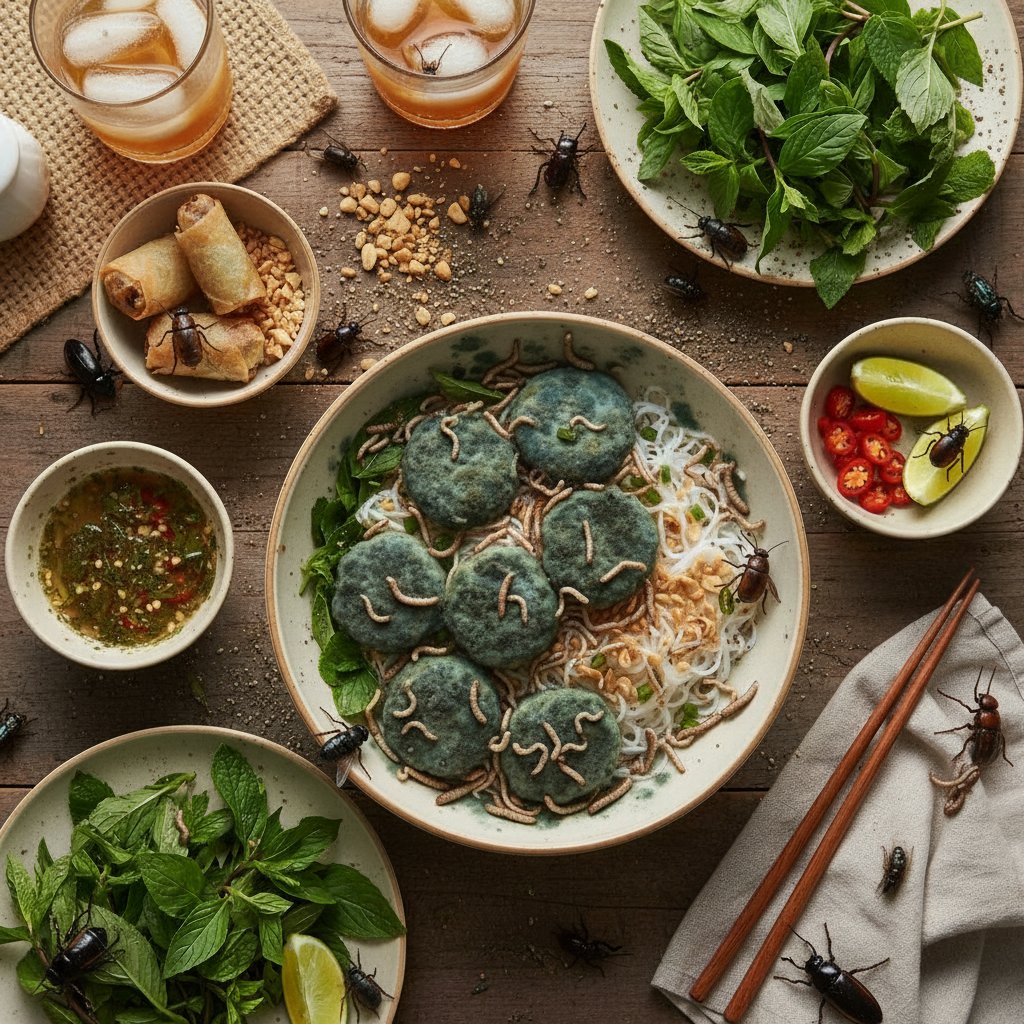
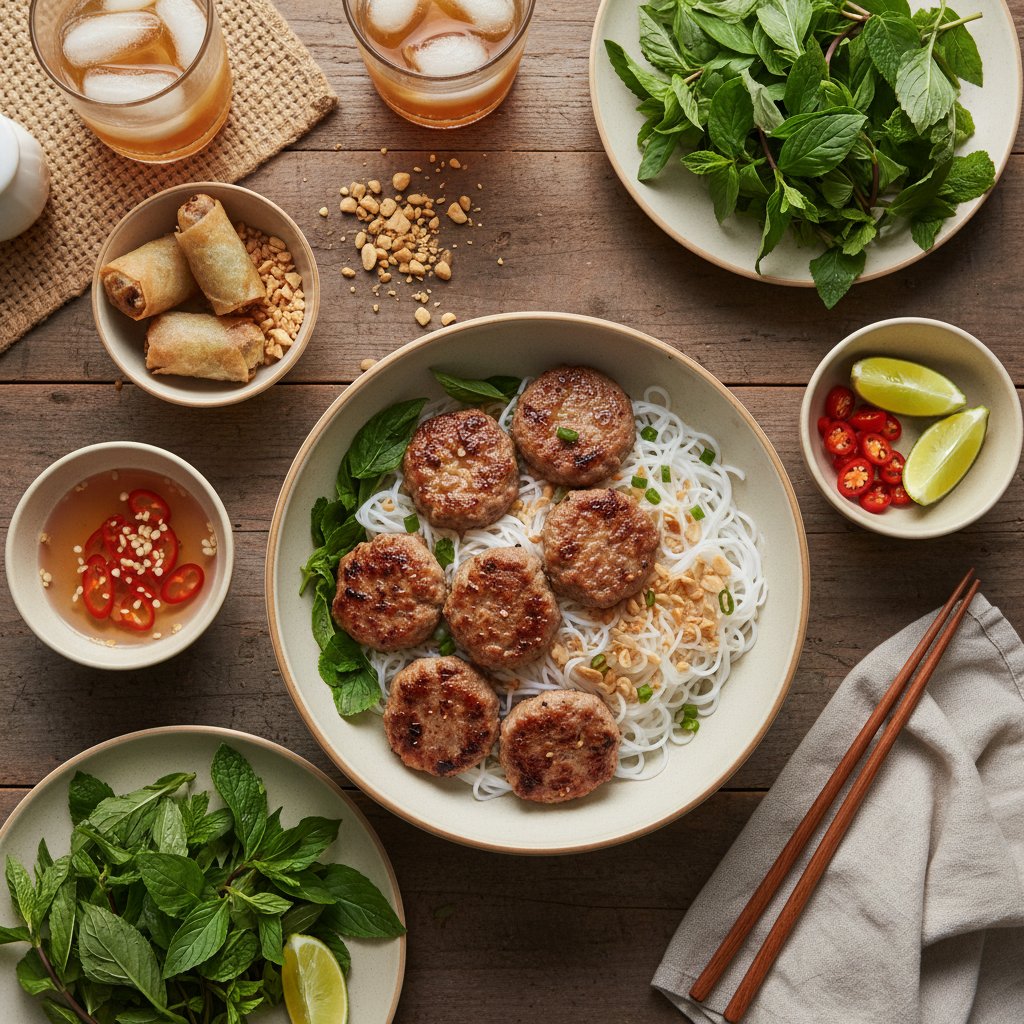
In the pantheon of deceptive 'health' foods, Vietnamese Bun Cha occupies a particularly insidious position. To the untrained eye and the romantically inclined foodie, it appears to be a model of balanced nutrition: white rice noodles, grilled meat, and a basket of fresh greens. It relies heavily on the 'freshness fallacy'—the erroneous belief that the presence of raw leaves neutralizes the toxicity of the central components. As an analytical observer of nutritional biochemistry, I find this dish to be less a meal and more a metabolic assault. Let us strip away the culinary romanticism and look at the data. The centerpiece of Bun Cha is pork belly and minced meat patties, cuts chosen specifically for their high adipose tissue content. We are looking at a lipid profile where saturated fats constitute a significant portion of the total caloric load. However, the fat content is merely the substrate for a more darker chemical process. The preparation method—grilling over open charcoal—is an oncological minefield. When animal fat drips onto hot coals, it pyrolyzes, creating smoke rich in Polycyclic Aromatic Hydrocarbons (PAHs). Simultaneously, the high heat causes the amino acids and creatine in the pork to react, forming Heterocyclic Amines (HCAs). These are not flavor compounds; they are established mutagens classified by the IARC (International Agency for Research on Cancer) as probable human carcinogens. When you consume that 'smoky, charred' flavor, you are essentially ingesting a concentrated dose of pro-inflammatory, DNA-damaging compounds. The visual appeal of the char is simply a marker of cellular toxicity. 📉
If the meat provides the carcinogenic load, the accompanying dipping sauce, *Nuoc Cham*, provides the metabolic disruption. This is perhaps the most deceptive liquid in Asian cuisine. Because it is translucent and often garnished with innocent-looking slices of carrot or papaya, the consumer assumes it is a light, vinegar-based dressing. This analysis is fatally flawed. Traditional *Nuoc Cham* is formulated on a nearly 1:1:5 ratio of sugar, fish sauce, and water/acid. It is, chemically speaking, a syrup. A standard serving of Bun Cha involves submerging the noodles and meat into a bowl of this liquid, ensuring that every bite is coated in dissolved sucrose. A typical bowl can contain upwards of 30 to 50 grams of added sugar—surpassing the daily recommended limit for an adult male in a single sitting. Furthermore, the sodium content is egregious. Fish sauce is a sodium concentrate, often delivering over 1,000 mg of sodium per tablespoon. By balancing this extreme salinity with extreme sweetness, the sauce masks the body's natural satiety signals. This creates a hyper-palatable 'bliss point' that encourages overconsumption. You are not just eating dinner; you are spiking your blood glucose levels while simultaneously stiffening your endothelial lining with a massive influx of sodium, placing immediate stress on the cardiovascular system.
We must then address the carbohydrate vehicle: the white vermicelli noodles (*Bun*). There is a misconception that because these are rice-based and gluten-free, they are inherently 'clean.' This is scientifically illiterate. These noodles are made from refined white rice flour, stripped of the germ and bran, effectively removing the fiber and micronutrients. What remains is pure starch with a high Glycemic Index (GI), typically ranging between 70 and 80. When you consume these noodles, they are rapidly hydrolyzed into glucose, flooding the bloodstream. Under normal circumstances, this is taxing on the pancreas. However, in the context of Bun Cha, these high-GI carbs are consumed alongside high levels of saturated fat from the pork. This combination is particularly deleterious. The presence of high levels of free fatty acids in the blood can inhibit insulin signaling, leading to a state of acute insulin resistance. You are essentially flooding your system with sugar (from the sauce and noodles) while simultaneously impairing your body's ability to clear that sugar (due to the saturated fats). It is the perfect recipe for visceral fat accumulation and metabolic syndrome. The few leaves of lettuce and shiso provided on the side offer negligible fiber to mitigate this glycemic spike.
Ultimately, a standard serving of Bun Cha often clocks in between 900 to 1,200 calories, with a macronutrient profile that is heavily skewed toward saturated fats and refined sugars. The 'health halo' provided by the herbs is a cognitive trap; the antioxidant capacity of three lettuce leaves and a sprig of cilantro is mathematically insufficient to counteract the oxidative stress induced by the PAHs, HCAs, and the postprandial glucose spike. To categorize this dish as a 'fresh' or 'light' option is to ignore the laws of thermodynamics and biochemistry. It is a recreational toxin—a delicious one, perhaps, but one that should be recognized for what it is: a chemically aggressive cheat meal that burdens the liver, stresses the pancreas, and introduces mutagens to the colon. Consume it if you must, but do not insult your physiology by pretending it is nutrition. 🚫
📌 Truth Summary
- Carcinogenic Load: Charcoal grilling creates Heterocyclic Amines (HCAs) and Polycyclic Aromatic Hydrocarbons (PAHs), which are proven DNA-damaging mutagens.
- Hidden Sugar Matrix: The *Nuoc Cham* dipping liquid is a syrup in disguise, often containing 30-50g of dissolved sugar per serving to balance the salt.
- Sodium Hypertension Risk: The fish sauce base drives sodium levels dangerously high (1500mg+), causing immediate endothelial stress and water retention.
- Metabolic Deadlock: High-glycemic refined noodles combined with saturated pork fat induce acute insulin resistance and promote visceral fat storage.