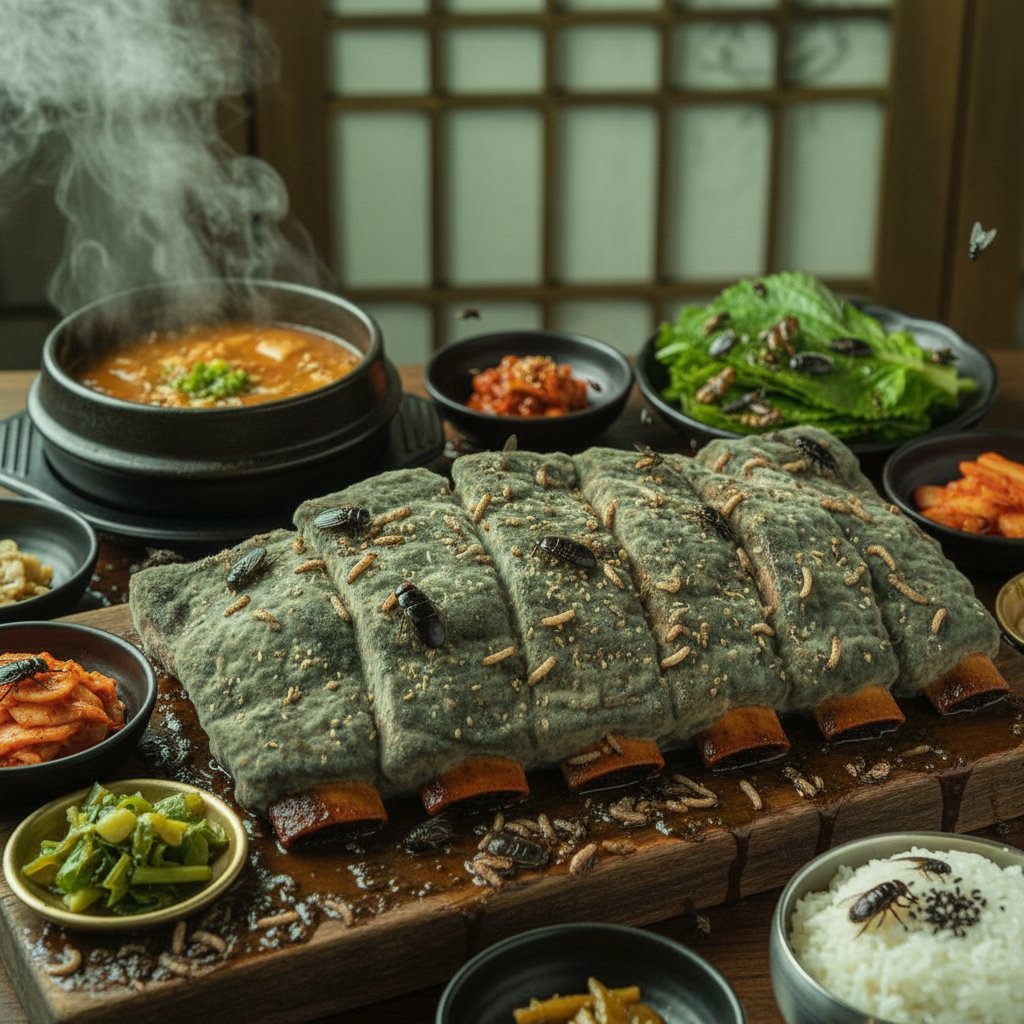
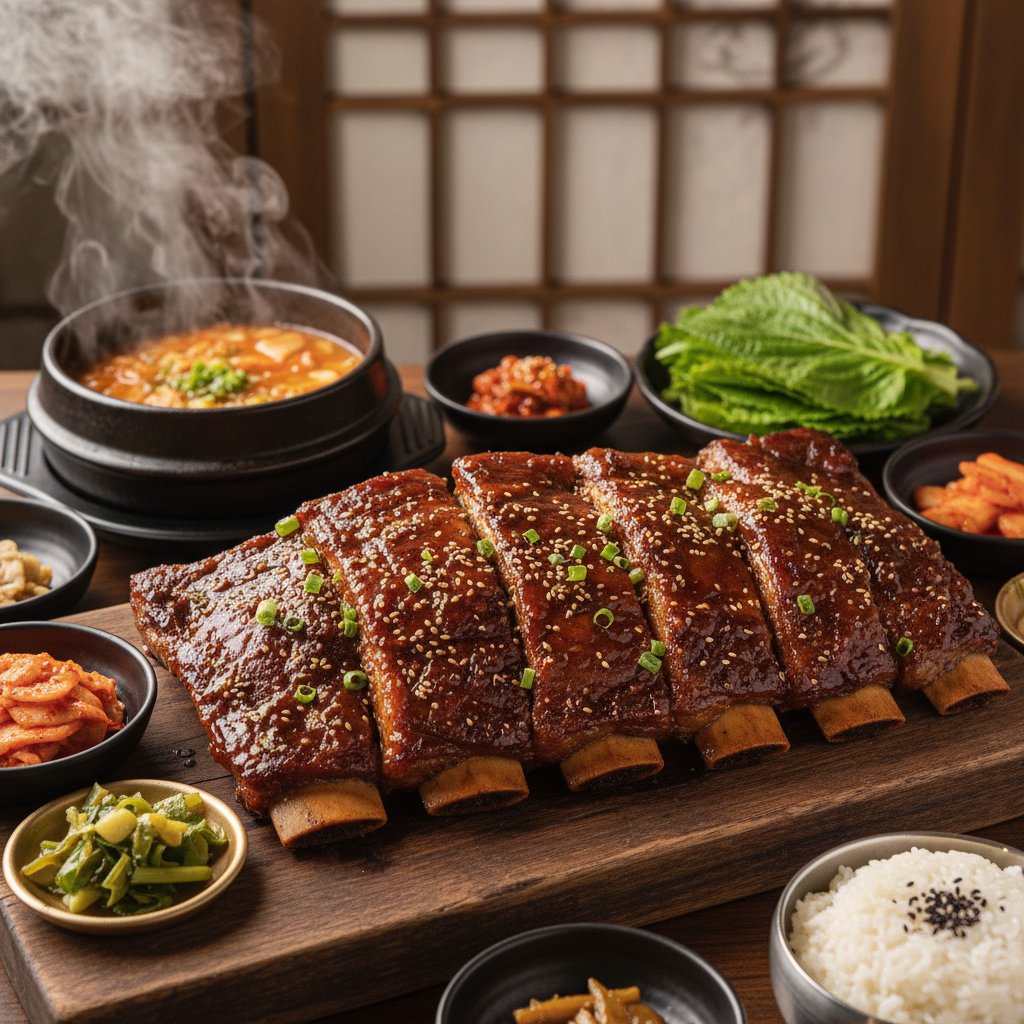
Let us dismantle the romanticized notion of the "Bone-in Short Rib," specifically the trendy iteration known as Woo-dae Galbi. Social media feeds are inundated with slow-motion videos of glistening, cross-sectioned beef ribs, celebrating the excessive marbling as a mark of quality. As a health analyst, I see something entirely different: a physiological assault. We must look past the aesthetic appeal of "melting" meat and confront the biological reality of what you are ingesting. This cut is not merely protein; it is a dense matrix of saturated lipids and connective tissue that requires aggressive tenderizing—often chemical or mechanical—to be palatable. Anatomically, these ribs (typically ribs 6 through 8) act as a storage depot for bovine energy reserves, meaning you are consuming the animal's most concentrated fat stores. A standard 300g serving of this cut, even before the inevitable sugary marinade, can easily exceed 1,200 calories, with over 70% of those calories derived solely from fat. We are looking at upwards of 30g of saturated fat per serving—double the American Heart Association’s daily limit for an entire 24-hour period. When you consume this, you are effectively flooding your bloodstream with triglycerides, inducing a state of postprandial lipemia where your blood turns turbid with fat, thickening the plasma and impairing endothelial function for hours 📉.
However, the lipid profile is only the first layer of this metabolic disaster. The preparation of Woo-dae Galbi typically involves a "signature" marinade, a euphemism for a hyper-palatable slurry of high-fructose corn syrup, refined sugar, and sodium-dense soy sauce. This creates a nutritional paradox that the human body is ill-equipped to handle: the simultaneous intake of high fats and high simple carbohydrates. Evolutionarily, this combination rarely exists in nature. When you ingest this caramelized beef, the sugar spikes your insulin levels immediately. High insulin inhibits lipid oxidation, meaning your body stops burning fat for energy and instead aggressively stores the massive influx of dietary fat from the rib directly into your adipose tissue. Furthermore, the marinade is a sodium bomb. A single meal can contain over 2,500mg of sodium, causing immediate water retention and a spike in blood pressure. The "sweet and savory" flavor profile is chemically engineered to bypass your brain's satiety signals—the "bliss point"—tricking you into consuming volume far beyond your caloric requirements. You aren't full because you're nourished; you eventually stop eating only because of physical gastric distension.
The toxicity of this dish is compounded by the cooking method. Woo-dae Galbi is prized for its char, often achieved through straw fire or charcoal grilling. While gastronomically celebrated as the Maillard reaction, biochemically, this process is a factory for carcinogenesis. When creatine and amino acids in muscle meat interact with heat, they form Heterocyclic Amines (HCAs). Worse, as the excessive intramuscular fat renders and drips onto the heat source, it causes flare-ups that produce Polycyclic Aromatic Hydrocarbons (PAHs), specifically Benzo[a]pyrene—a Group 1 carcinogen also found in cigarette smoke. The smoke that rises and coats the meat is not "flavor"; it is particulate toxicity. By eating the charred exterior of a bone-in short rib, you are essentially scrubbing your digestive tract with mutagenic compounds that have been directly linked to colorectal cancer. The straw-fire method, specifically, can deposit uncontrolled amounts of soot and carbon directly onto the surface of the meat. You are paying premium prices to consume free radicals that accelerate cellular aging and systemic inflammation ☠️.
Finally, we must address the aftermath of digestion. The collagen structure of the short rib, while gelatinous when hot, re-solidifies in the digestive tract. The sheer density of the protein-fat complex requires immense enzymatic effort to break down, diverting significant blood flow to the stomach and intestines—the phenomenon often jokingly referred to as a "meat sweat" or food coma. This is not relaxation; it is a sign of metabolic stress. Your body is working overtime to manage the oxidative stress caused by the surge of inflammatory lipids and the insulin spike. Regularly consuming cuts like Woo-dae Galbi accelerates the development of visceral fat—the dangerous fat stored around organs—and pushes the body toward metabolic syndrome. It is a dish that represents the worst of modern consumption: excess calories, pro-inflammatory ingredients, and carcinogenic preparation methods, all wrapped in a narrative of luxury. To eat this is to willingly subject your vascular system to a stress test it was never designed to pass.
📌 Truth Summary
- Lipid Toxicity: A single serving contains ~30g of saturated fat, inducing immediate endothelial dysfunction and triglyceride spikes significantly above daily safety limits.
- The Glaze Trap: The combination of high-fructose marinades and high dietary fat triggers aggressive fat storage via insulin spikes while overriding natural satiety signals.
- Carcinogenic Load: Dripping fat on charcoal generates Polycyclic Aromatic Hydrocarbons (PAHs) and Benzo[a]pyrene, coating the meat in Group 1 carcinogens.
- Caloric Density: A standard portion exceeds 1,200 calories with negligible micronutrient density, functioning solely as a pro-inflammatory metabolic burden.