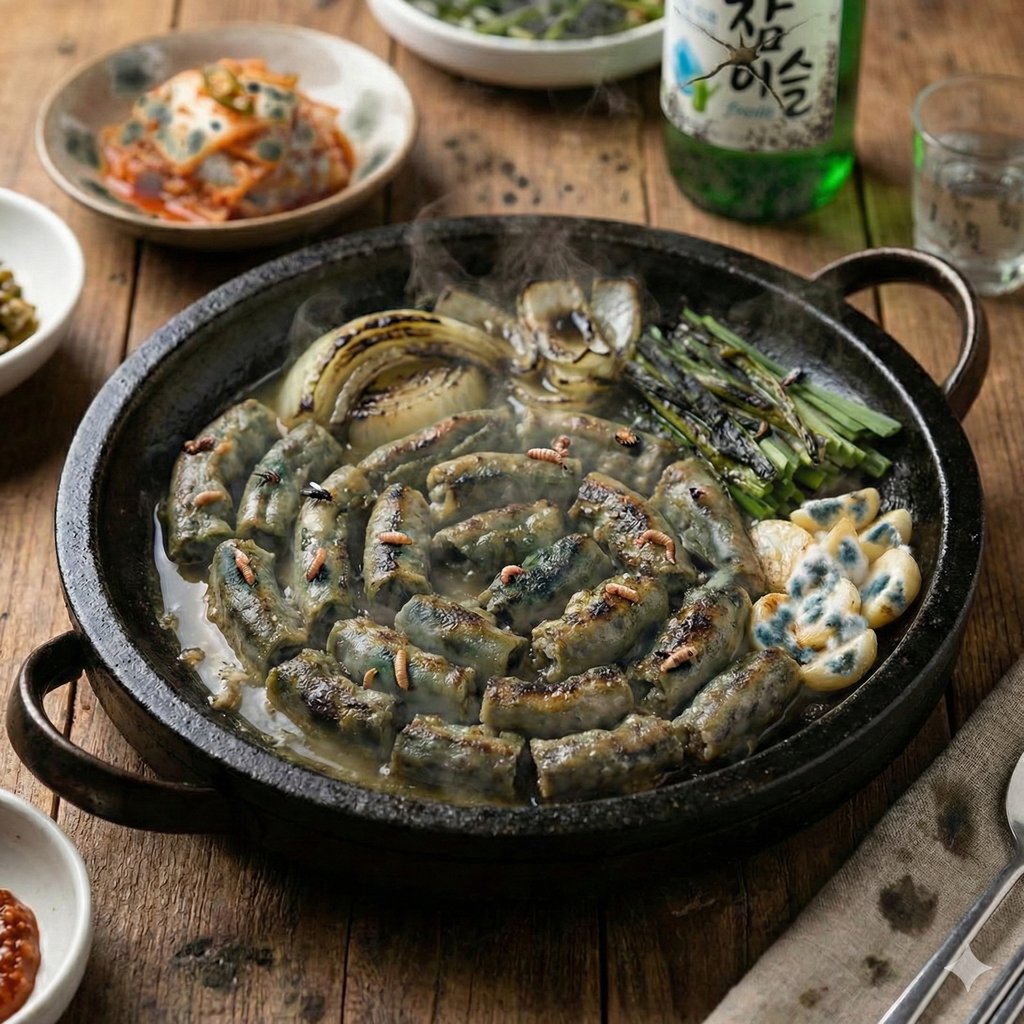
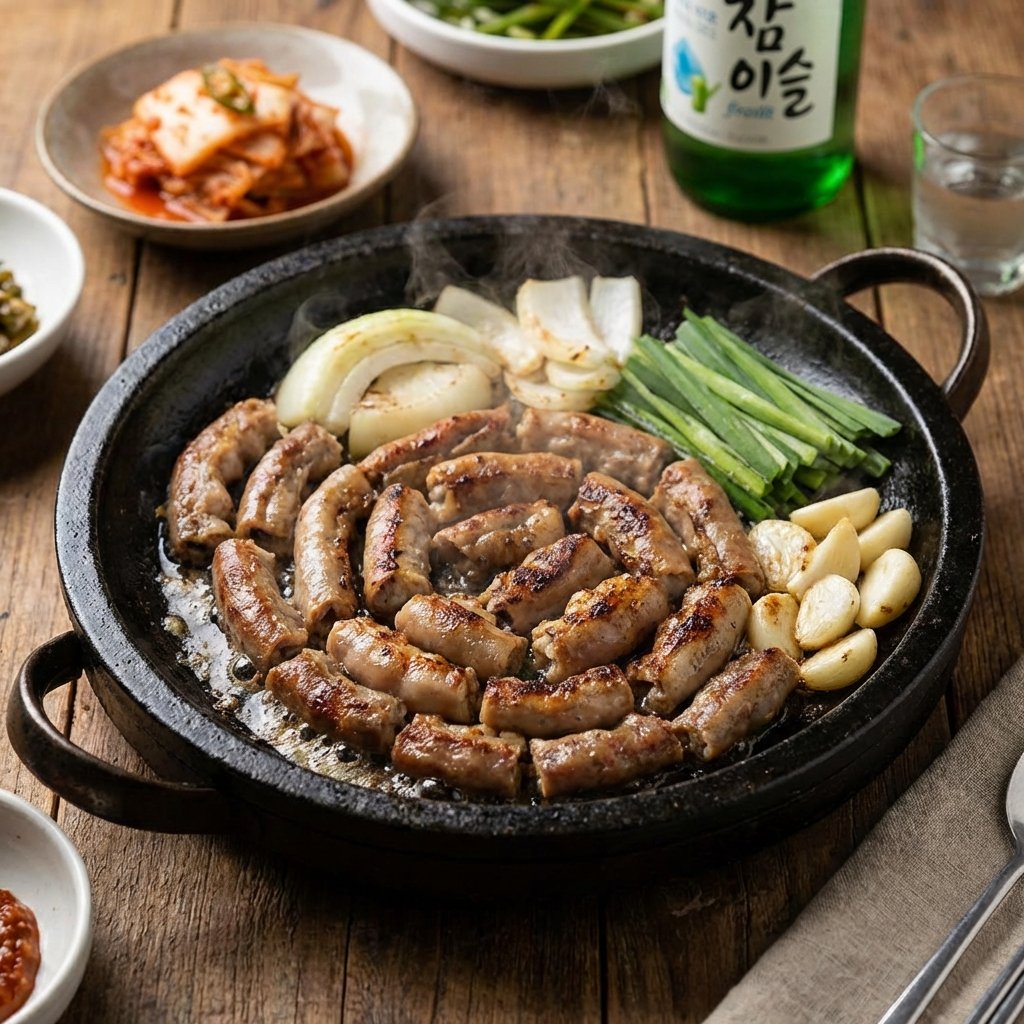
If you are reading this, you are likely looking for validation to indulge in what is culturally romanticized as a 'delicacy.' I am here to provide the opposite: a cold, hard look at the biological sabotage involved in consuming Beef Small Intestine, locally known as Gopchang. Let us strip away the sizzling sound effects and the social lubrication of soju and look at the raw data. To call this 'meat' is a generous euphemism. Anatomically, you are consuming the bovine absorption system, a tube designed to process waste and lipids. The prized white filling, or 'gop,' which enthusiasts wax poetic about, is essentially a mixture of digestive enzymes, mucus, and partially digested fats. From a nutritional standpoint, Gopchang is a caloric density disaster. A standard 200g serving—which most diners exceed effortlessly—contains upwards of 800 to 1,000 calories once you account for the oil used to grill it. However, the calorie count is merely the surface of the problem. The macronutrient profile is where the true horror lies. This organ meat is approximately 70% to 80% fat by caloric weight. We are not talking about the heart-healthy monounsaturated fats found in olive oil or avocados. We are dealing with long-chain saturated fatty acids, specifically palmitic and stearic acids. These are the primary architects of LDL (low-density lipoprotein) elevation. When you consume a standard portion, you are ingesting nearly 40g of saturated fat—double the American Heart Association’s recommended daily limit for an adult male—in a single sitting. It is a direct injection of arterial plaque 📉.
Let’s analyze the cholesterol content, which is astronomically high even by organ meat standards. A single serving of beef small intestine contains approximately 250mg to 300mg of dietary cholesterol. While current science suggests dietary cholesterol has a nuanced relationship with serum cholesterol, the combination of high dietary cholesterol plus extreme saturated fat intake is unequivocally damaging. It downregulates the LDL receptors in your liver, preventing your body from clearing cholesterol from your bloodstream. This creates a hyperlipidemic state that persists for hours after the meal, a condition known as postprandial lipemia. During this window, endothelial function (the flexibility of your blood vessels) is significantly impaired. Furthermore, the 'chewy' texture that fans adore is derived from dense collagen and elastin networks that are notoriously difficult for human enzymes to break down. This leads to heavy gastric load and delayed gastric emptying. You are essentially forcing your digestive system to work overtime to process a substance that offers almost no micronutrient density compared to lean muscle tissue or vegetables. The 'gop' itself acts as a sponge for toxins the animal may have ingested, bio-accumulating lipophilic contaminants. You aren't just eating fat; you are eating the storage unit for the animal's biological stress.
We must also address the thermodynamics and chemistry of the preparation method. Gopchang is almost exclusively grilled, often over charcoal or gas flames, until it creates a charred, crispy exterior. This process is a textbook generator of carcinogens. When animal fats drip onto a heat source, they undergo incomplete combustion, rising back up in the smoke as Polycyclic Aromatic Hydrocarbons (PAHs). Simultaneously, the amino acids and creatine in the meat react at high temperatures to form Heterocyclic Amines (HCAs). These are Class 1 and Class 2A carcinogens according to the IARC. Unlike a lean steak, where you can trim the fat, the fat in Gopchang is intrinsic to the structure; you cannot grill it without generating these toxins. Analytical studies have shown that the concentration of benzo[a]pyrene (a potent carcinogen) in grilled organ meats can be significantly higher than in lean cuts due to the sheer volume of lipid combustion. To make matters worse, this dish is culturally tethered to high alcohol consumption. Alcohol acts as a solvent for these carcinogens, increasing the permeability of your esophageal and intestinal lining, effectively rolling out a red carpet for these toxins to enter your bloodstream. It is a synergistic attack on your cellular DNA.
Finally, we cannot ignore the sodium content involved in making this offal palatable. In its natural state, the intestine has a distinct, fecal odor. To mask this, restaurants utilize aggressive cleaning agents followed by marinades rich in sodium, sugar, and msg. A typical dipping sauce and the pre-seasoning can easily push the sodium content of a meal over 1,500mg—approaching the daily upper limit. This sodium load causes immediate water retention and a spike in blood pressure, forcing the heart to pump harder against the resistance caused by the aforementioned endothelial dysfunction. It is a perfect storm for hypertension. When you combine the visceral fat accumulation driven by the calories, the carcinogenic load from the charring, and the vascular constriction from the sodium, Gopchang represents one of the most metabolically expensive foods you can consume. It is not food for fuel; it is food for pathology. Eat it if you must, but understand that your lipid profile will bear the scars long after the taste fades 🩸.
📌 Truth Summary
- Lipid Overload: A single serving contains double the daily limit of saturated fat, comprised mainly of artery-clogging palmitic acid.
- Carcinogenic Chemistry: The grilling process generates high levels of PAHs and HCAs, toxins linked to DNA damage, which are absorbed more rapidly when consumed with alcohol.
- Zero Nutritional Utility: Unlike muscle meat, the calorie-to-nutrient ratio is abysmal, providing massive energy surplus with minimal micronutrient benefit.
- Sodium Toxicity: To mask the organ's natural odor, marinades and sauces spike sodium intake to over 1,500mg per meal, stressing the cardiovascular system.