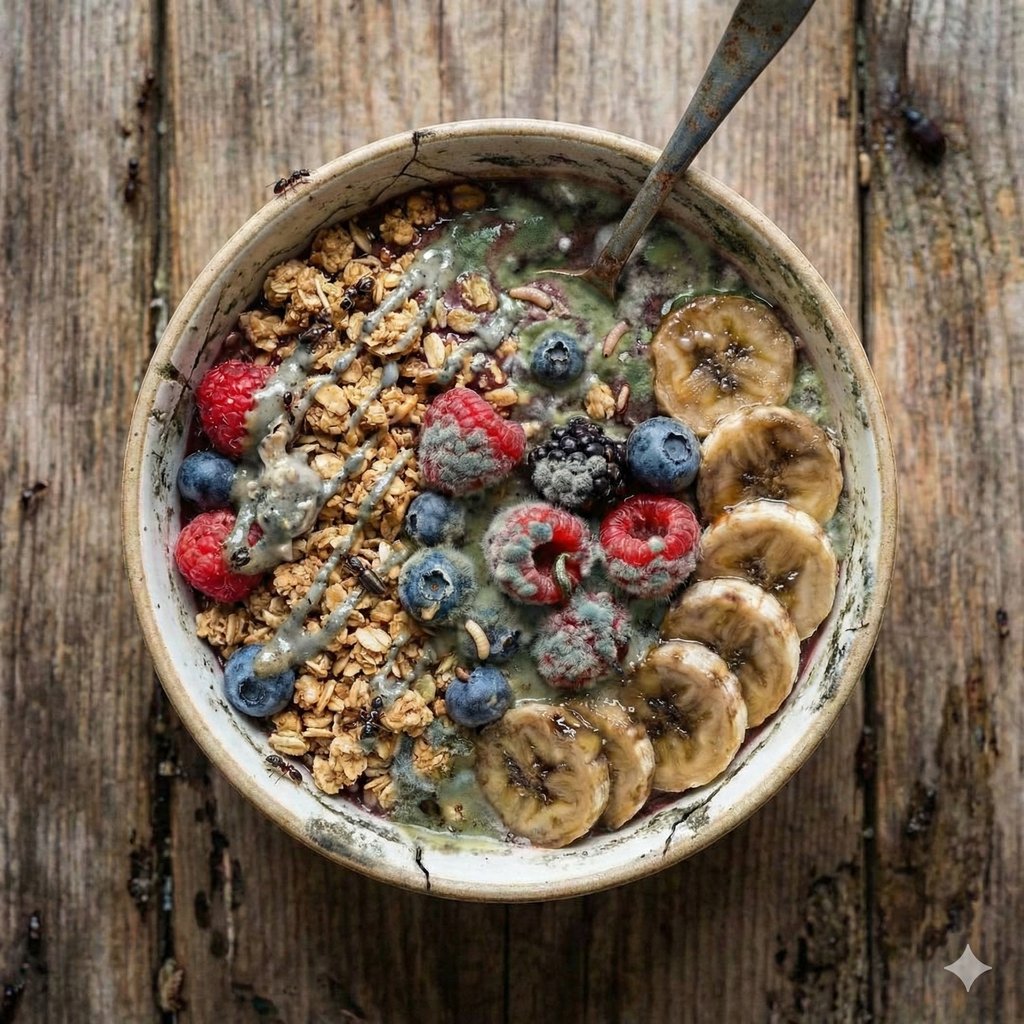
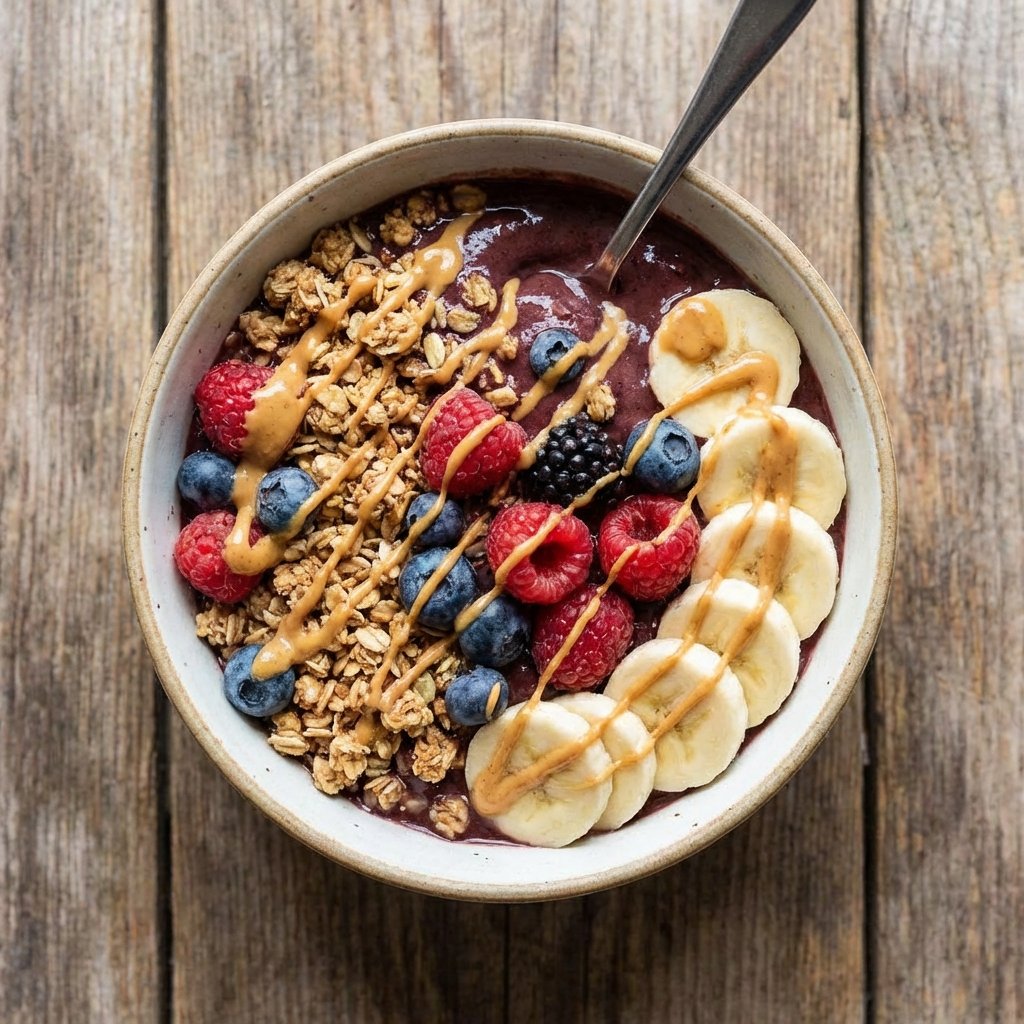
A clear summer afternoon shines through a café window, illuminating a deep purple substance in a glass bowl. Orange granola is scattered generously across it, with white coconut flakes and pink strawberry pieces creating a perfect symphony. Instagram influencers proclaim this bowl as "the Amazon's superfood," suggesting every nutrient on earth is concentrated in this single vessel. You, trying to fit back into loosened shorts, reach toward this fantasy bowl with hope.
Acai berries are indeed a deep purple, indigenous only to the Amazon rainforest, and reportedly rich in anthocyanins. But here's the critical part you're missing: the acai in the bowl isn't fresh berries at all—it's acai concentrate or powder mixed with sugar and syrups. Each spoonful of acai base poured into the bowl already contains 7-10g of sucrose and glucose syrup hidden inside.
Let's examine the toppings sprinkled across the bowl carefully. The "granola" is actually cereal clusters coated in butter, sugar, and refined flour—a carbohydrate bomb. Each spoonful contains about 2.5g of sugar, and typically 5-6 spoonfuls are scattered on top. Coconut flakes have added sugar from the drying process, and nuts drizzled with honey or maple syrup continue delivering hidden sugars to your diet. Combined, this single bowl becomes more of a sugar bomb than most desserts. 💣
The moment you lift the fork to your mouth, while it feels like eating one food, you're actually consuming 40-55g of simple sugars—a blood sugar bomb. Your pancreas rushes to secrete insulin to combat the rapidly rising blood glucose. When insulin drops blood sugar too quickly, you enter a hypoglycemic state, and your brain demands more sugar. This is precisely why "you feel hungry again one hour after eating an acai bowl." Riding on the blood sugar roller coaster, by 4 PM your concentration crashes, and you're reaching for chocolate or another coffee.
Hidden at the bottom of the bowl lies another truth. Most cafés use butter or coconut oil in the acai base to increase thickness. This adds extra saturated fat, already contributing 300-400 calories to the base. Add the 400 calories from toppings, and this "healthy snack" becomes a near-800-calorie full meal. You thought you were eating a salad, but you've actually eaten a cheeseburger.
Even more tragic: all these calories fail to activate leptin, your satiety hormone. The excessive combination of simple carbs and unhealthy fats signals your brain to "keep eating." You finish one bowl feeling as if you hadn't eaten anything, searching for more food in the afternoon. This is the most insidious trap of superfood marketing. 😔
Refusing an acai bowl isn't about protecting the Amazon rainforest or sacrificing superfoods. It's about protecting your metabolism. True healthy eating isn't proven by granola's shine or Instagram likes. It's proven when your body maintains stable blood sugar, continues working through the afternoon without fatigue, and when you can finally make choices based on nutrition rather than trends. That simple glass of water and handful of almonds you drink instead will bring more powerful transformation than that glamorous bowl.
📌 The Truth: One Acai Bowl's Reality
- Sugar Content: 40-55g (exceeds daily recommendation for adult women by 100%+, equals 3 chocolate bars)
- Calories: 600-850 calories (not a light snack but a full meal with low satiety)
- Saturated Fat: Acai base and toppings' butter and coconut oil raise cholesterol
- Blood Sugar Impact: Rapid spike → insulin surge → hypoglycemia 2 hours later 🛑
- Real Nutrition: Superfood anthocyanins buried under sugar, minimal health benefit